Blog

  • The four horsemen of the AI apocalypse

    The four horsemen of the AI apocalypse

    Yeah – didn’t that headline make you think of thundering hooves and skeletal riders carrying scythes?

    Don’t worry about mental images. Do worry about the impact AI will have on your marketing team, your brand and your budget.

    AI promises are everywhere – from revolutionising your workflows to personalisation at scale (and firing your marketing agency). Below the utopian vision is the misguided reality. Get this wrong and you put your brand and budget under threat.

    Saddle up and meet the four horsemen riding towards us.

    • Horseman #1 – the plague of sameness
    • Horseman #2 – the war on data integrity
    • Horseman #3 – the famine of original thought
    • Horseman #4 – the death of customer trust

    More detail on conquest, war, famine and death, the causes, symptoms and cures later. You’re going to love them all…!

    Horseman #1 – The Conquest of Complacency (the plague of sameness)

    The first critical failure of AI strategy comes in the form of blind, unthinking use of AI to create generic, undifferentiated swill pretending to be content marketing. 

    Since all AI models are trained / training on the same data (the whole of the public internet) there’s a convergence of style, tone of voice and worst, ideas. 

    Your brand voice becomes the same as everyone else’s – a robotic echo of the AI training data. The risk of losing your brand in the sea of sameness and the result is your marketing is invisible – it fails to connect on a human level and your brand authority evaporates.

    Yes this is an AI image – ChatGPT can’t count!

    Real World Example

    Churning out 50 blog posts a month using AI leads to click rates plummeting (and that’s not because of GEO); your value proposition gets further and further away from being unique and the symptoms of sameness proliferate.

    The Antidote: Strategic Curation

    DO use AI for the heavy lifting – research, outlines, drafts. But mandate a human-in-the-loop process for all strategy, brand voice and to add creative spark. Build prompts which incorporate your specific brand characteristics, differentiators and unique point of view.

    Onwards…. Next is horseman #2

    Horseman #2 – The War on Data Integrity (the poisoned well)

    Our second ‘friendly’ horseman comes from building your marketing castle on the sinking sand of dirty, ungoverned and biased data. We all know rubbish in = rubbish out. And AI models aren’t immune – they must be fed with high quality data from trustworthy sources. Those sources are YOU, YOUR BRAND and YOUR CUSTOMERS. All first-party data points. 

    Making business decisions based upon flawed AI insights has clear dangers. These might be personalisation which doesn’t align with customers’ lived reality, creepy tone of voice and lead to customers getting alienated from biased data causing a baked-in misalignment in marcomms.

    Real World Example

    A lead scoring model trained on outdated CRM data prioritises the wrong accounts. The sales team chases (more) ghosts than ever and the real high-potential prospects slip away. Or dynamic creative optimises towards a biased audience segment leading to a PR firestorm. Examples here

    [Note every time smart machines try to use AI it tends towards evil. Why? Because human moral or legal or religious or evolutionary tendencies towards goodness don’t apply to them. Ted Gioia]

    Another AI image creation – it’s a bit dark for my liking

    The Antidote: Robust Data Governance

    Yes, this is stuff we know how to do as it treats your business data as a strategic asset. Intangibles are a part of your business balance sheet (just ask Paul Adams ex EverEdge) and your data builds your brand – directly.

    Yes this means you will need to pay for a private AI so your private business data does not leak. Yes you’ll need to set up regular data health initiatives and checks, yes you’ll need to work harder on your first party data hygiene. Question the source of every AI driven insight. Can you defend it? Do you know where the inputs came from?

    Onwards….to the third horseman.

    Horseman #3 – The Famine of Original Thought (the creativity desert)

    When you don’t use a muscle it atrophies – and creativity is just like a bicep – gotta keep flexing it. If your team outsources the thinking to machines, the human ingenuity which you cultivated (and which got them hired) just stops working as hard. Soft muscles are not robust and strain under pressure. Breakthrough marketing gets noticed, soft porridge does not.

    If your team gets so good at using AI tools that it loses the ability to create truly novel campaigns they’ve become tactical executors not strategic thinkers. Do you think the American Eagle campaign could have come from AI alone? What about this article series? 

    Image credit: American Eagle

    Real World Example

    Iterating your marketing plan for 2026 based on the past performance of your brand and campaigns will optimise the status quo – it won’t move the brand forward. This leaves you exposed to competitors whose human led strategy could blue-sky an opportunity which you missed.

    The Antidote: Mandated ‘human time’

    Set up your marketing cycle to include brainstorming by humans. Use your offsite days to check in that your strategy is strong and defensible and listen really hard to what your customers are saying.

    Onto the final horseman – number four.

    Horseman #4 – The Death of Customer Trust (the relationship reaper) 

    Trust is so valuable and hard to earn; yet can be lost fast. Be certain that hyper-personalisation efforts are effective, AI interactions are identified (is this a chat bot or a human support team member?) and how does the customer feel after conversing with your brand?

    The danger is that customer frustrations build and loyalty is withdrawn. There’s usually a close competitor happy to take their custom.

    Another AI image. Six horsemen, four horses – one is “riding” a human!

    Real World Example

    Advertising that’s eerily specific leaving customers feeling “big brother is watching me”. Or the endless doom loop of a chatbot that returns to the beginning after every dead end “I’m sorry Dave I can’t do that” response. 

    The Antidote: Ethical and Transparent Deployment

    Be clear when you’re using AI. Say it – name it – explain it. AI is an augmentation to the human experience, not a replacement. Make the hand-offs to human support agents as seamless as possible and explain to customers how to escalate their case. Then reinforce your service team with AI supported information so that they serve customers smoothly as the well-informed brand representatives you need them to be.

    Want to ensure AI strengthens your brand instead of hurting it? Talk to Numero for an AI-safe marketing strategy.
  • How to give website revisions feedback

    How to give website revisions feedback

    Providing effective feedback during a website build ensures your project stays on schedule and meets your expectations. From written notes to video recordings, understanding the best practices for website revisions helps designers implement your vision accurately and efficiently.


    When chatting with the numero® website team there is one frustration which happens more than any other.

    We are waiting for client feedback.

    Why is this such a big issue?

    Project management timelines are based on ‘dependencies’ – these are tasks which must be completed before another task can be started. And we don’t do anything without client approval. Some clients trust us with pre-approvals – but that’s never the case when we are building websites.

    Website builds are different. They’re personal – businesses have high standards and it’s important that brand values and tone of voice are accurately reflected in the build. This requires dialogue and feedback between the numero team and the client.

    How to give website revisions / feedback as a client

    Rapid Slabs and Precast is a client who gave good website feedback. Let us show you.

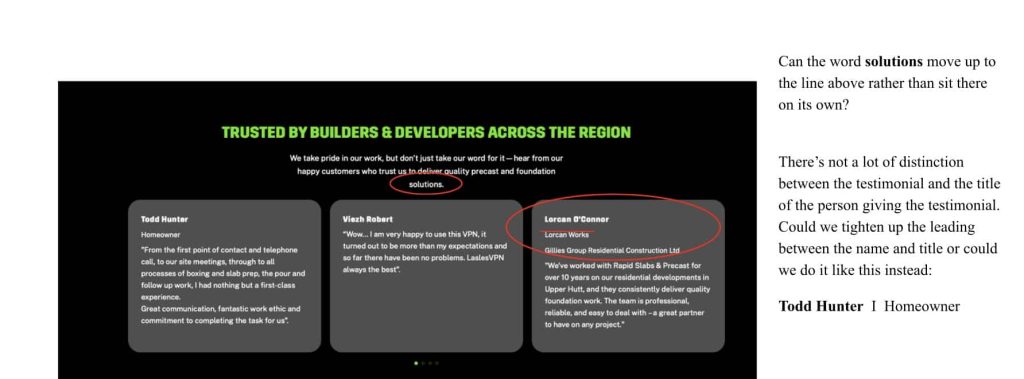
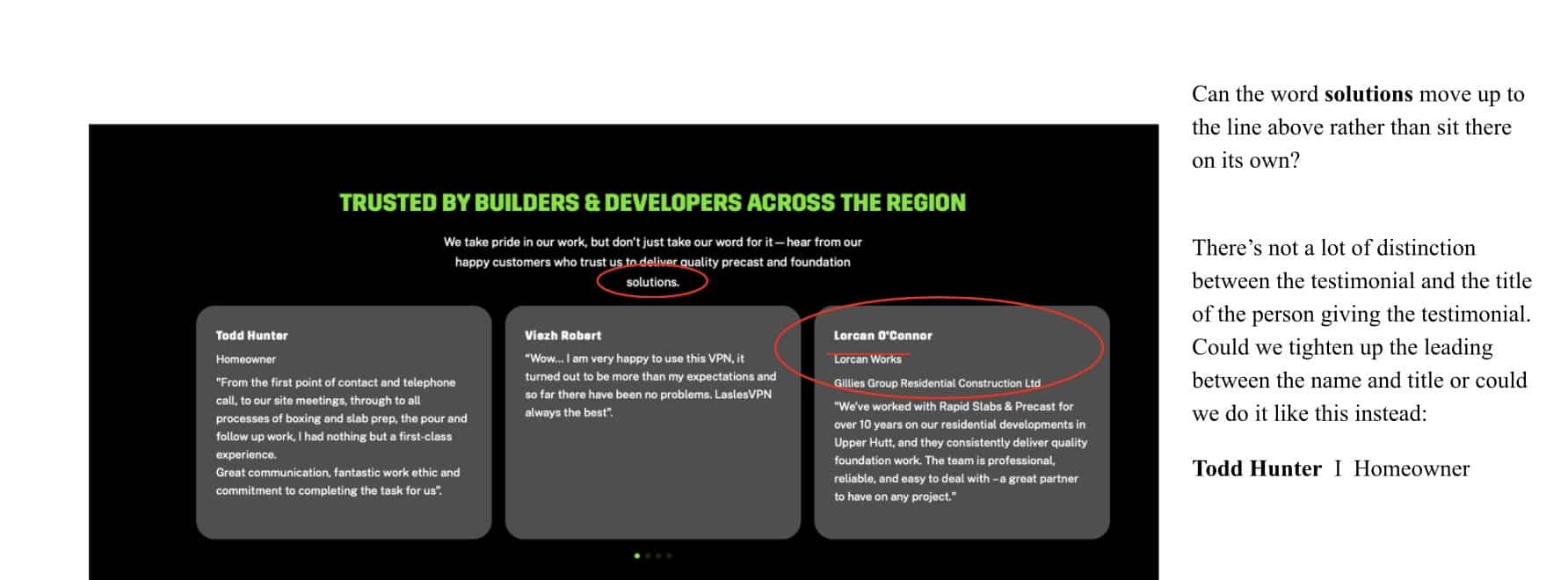
    Here’s a picture taken from a document they made. Each change is circled in red ink and on the right the instruction about what to change is made clear.

    Feedback on website build layouts

    Different types of feedback

    Sometimes you know exactly what you want changed – like the apostrophe in the example above.

    Other times you may have a question or be unsure which version is better. Take a look at this image – the top remark is a simple instruction to make a change. The lower one makes it clear what the end result the client wants – more distinction between the job title of the person and their name – but the client wasn’t sure exactly how to achieve this.

    Website feedback that asks a question

    This is good feedback. Because we now know that there’s an issue – and our designers can use their design skills to present solutions. You don’t have to know the answer when giving feedback – it’s fine to ask for alternative layout options.

    Other ways to give feedback

    If you aren’t a fan of the written word, you can also easily give feedback using video. Loom is a great free software tool that allows you to make a video which is up to 5 minutes long.

    It shares your screen so you can load up the site and then describe your feedback and use your mouse as a pointer or to highlight the area you are talking about.

    I recorded this from our own website as an example for you.

    Website build delays

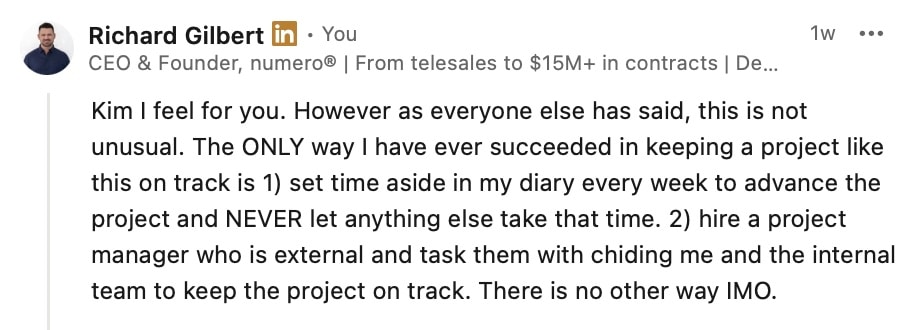
    The inspiration for this article came from a post shared on LinkedIn – here it is and my reply.

    Hi, my name’s Kim, and I’m going through a rebrand.
    One that was meant to be finished 𝙨𝙞𝙭 𝙢𝙤𝙣𝙩𝙝𝙨 𝙖𝙜𝙤.

    Back in 2013, I paid someone on Upwork to do my logo. I did not expect to keep them as long as I did, but a decade flashed by and here we are.

    Earlier this year, I decided we’d grown up a bit and it was time to get the experts in. Proper job. Big thanks to Gemma Ede, Monsoon Creative, and Alex Browning. (They’ve been incredible!)

    The problem? Me.


    How much time does this take? 𝐋𝐨𝐭𝐬.
    How much did I have? 𝐍𝐨𝐧𝐞.

    Am I scared about the rebrand? Not really. It’s time the brand “grew up.” We’ve got exceptional clients, and the new version reflects that.

    Did I completely underestimate how much time it would take? 𝐘𝐞𝐬. 𝐁𝐲 𝐥𝐨𝐭𝐬.

    Now I’m paying for it. The website should 𝙛𝙞𝙣𝙖𝙡𝙡𝙮 launch this November. I’ve learnt my lesson. I promise. Anyways, I’m tired.

    Rebranding experts out there: Any tips from lessons learnt the hard way?

    Our founder Richard couldn’t wait to reply… because we KNOW that this happens too often. And this was his advice.

    Advice on project managing a new website rebrand

    Briefing designers takes practice

    You will only build a website once every 3-4 years but you probably work with graphic designers and web designers more regularly. There’s an amazing book which was written by a designer and explains in how to get what you want from creative people. It’s in the form of short letters – each chapter addresses a different situation. And it’s beautifully designed, as you’d expect from a designer.
    I commend it to you.

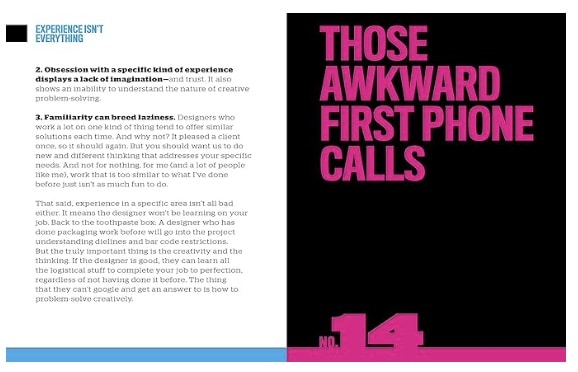
    Dear Client book by Bonnie Siegler
    Example chapter on first phone calls
  • 3 Ways To Kick-Start Your Online Marketing Campaign In NZ

    3 Ways To Kick-Start Your Online Marketing Campaign In NZ

    You’re a business owner and you might be feeling the pinch – maybe sales are off or you are seeing inflation and margin erosion. Your thoughts are moving towards doing some marketing as a way to boost sales. If you aren’t confident about where to start and what to expect from different types of marketing activity.

    numero® serves many, many business owners in New Zealand as their marketing agency of choice. We know the questions we get asked when speaking to our prospects, we know the results we can deliver in the first 90 days when we’re working with them. Let us help you with some guidance.

    Online marketing is vital to the success of your business unless you have recurring contracts that sign up year after year without any sales contact needed. If this is you – congratulations – great business model. For the rest of us, we need to bring in new customers. This can be through any type of promotion, marketing or advertising on digital platforms like websites, social media, and email.

    Before you start

    Remember your woodwork teacher in school saying “Measure twice, cut once”?

    Well marketing is the same. First you plan, define a goal and know exactly what type of customer you’re looking to attract. Then do a quick audit of your business online presence – website, social media, reviews, Google Business Profile. What have you got and what is missing? It’s worth logging how many followers or visitors you have on these digital assets now so you’ve got a baseline comparison for the future.

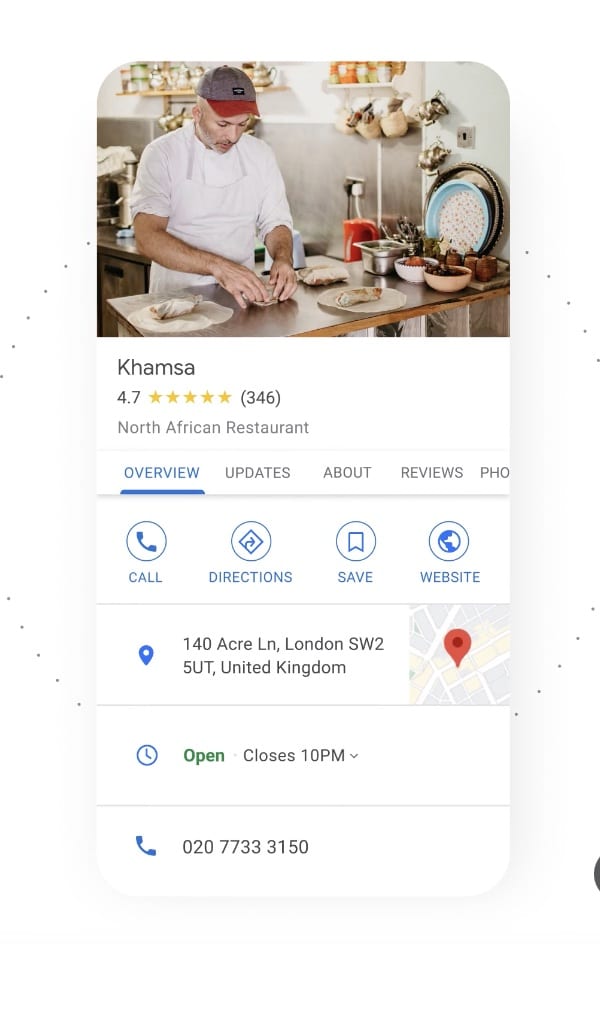
    Screenshot of Google business profile
    Google Business Profile

    Here are three areas of online marketing which are effective in NZ – focus your efforts here for a successful digital marketing endeavour. These are vital tools in your online marketing toolbox.

    Search Engine Optimisation (SEO)

    A cornerstone of online marketing strategies is search engine optimisation. This is any strategy used to drive high quality visitors to your website (unpaid). Specific keywords are selected and used in your website to rank you high up on search engine results. Keywords are the words or phrases that potential customers would use when searching for your type of product or service

    Learn more about SEO services.

    Content Marketing

    When you write or video or photograph anything which is shared online, this called content marketing. We include things like the words (copy) on your web pages, sound bites (podcasts), videos, blogs, articles and social media posts are all forms of content marketing

    The aim of producing such material is to be helpful with advice and sharing your expertise. This attracts the attention of customers and potential customers and leads them to your (digital) door. Here you can tempt them into buying your product or service. This content needs to be fresh, exciting, entertaining, informative or provocative to generate interest from prospects.

    Learn more about website improvements.

    Paid Advertising

    Part of your online marketing should include paid advertising. While it may be nice to think you can do marketing for no cost, the reality is that SEO and content marketing take time to build up a head of steam and product results. Whereas advertising can bring instant results.

    There are many forms that this can take, including:

    • Social media adverts
    • Banner adverts
    • Paid advertising on search engine results pages
    • Pop up adverts
    • Contextual adverts

    In pay-per-click advertising (PPC), potential customers click on your advert which takes them to the website home page or product page. The advantage of this method is that you only pay for each click, so customers who aren’t interested in your offer will be automatically excluded. But, as prospective customers arrive at your website, it is a very effective strategy to get traffic.

    Learn more about digital advertising.

    Contact Numero today to find out how we can help you to set up online marketing campaigns. We are a full service, Google certified digital agency and have a long track record optimising business digital assets that grow sales and profits.

    Resources and further reading

    What does a new website design cost to build?

    What percentage of Google search traffic goes to the top 3 results?

  • What Percentage of the Google Search Traffic Goes to the Top 3 Searches?

    What Percentage of the Google Search Traffic Goes to the Top 3 Searches?

    When it comes to organic online searches, business owners have the same goal – to rank their website at the top of the search engine results pages (SERPs). This is for natural search (not paid).

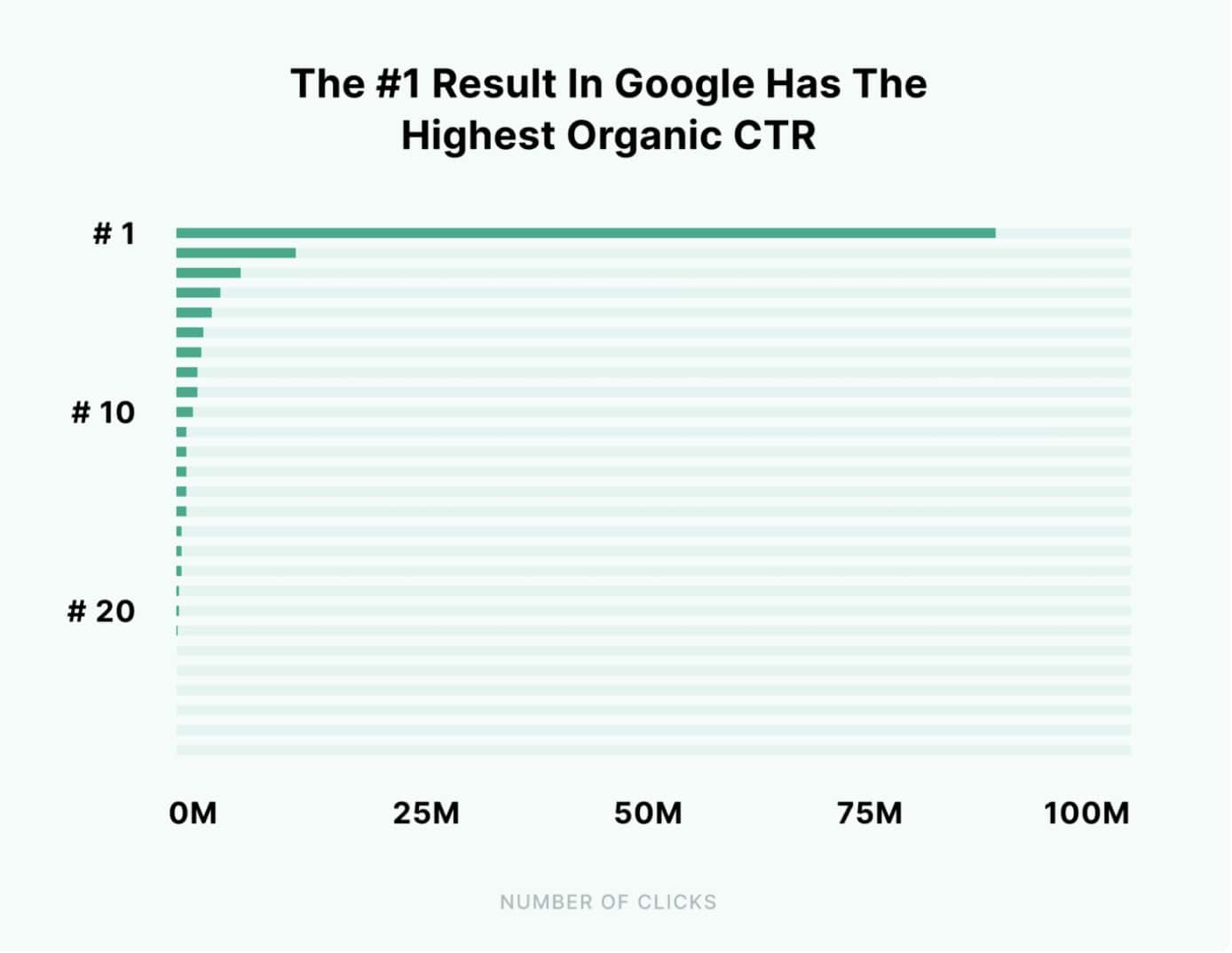
    Although an uphill task, it’s worth pursuing because a top position in the search results supports higher organic click-through rates (CTR). The distribution of clicks on average are:

    Average Click-Through Rates (CTR) for Top Google Results

    • Position 1 – 39.8% average CTR
    • Position 2 – 18.7% average CTR
    • Position 3 -10.20% average CTR

    Source: 2025 study by Backlinko.

    Read the link to see how powerful this top spot is.

    • The number 1 result in the organic SERPs receives an average of 27.6% of the traffic clicks.
    • The top spot is ten times MORE likely to get a click than the tenth spot.
    • Below the top spots, the organic click-rates for positions 8 through 10 are almost the same.
    Graph of click results from Google ranked. Image Credit: Backlinko

    Key factors that can change your ranking

    Remember averages disguise a range – within this are higher and lower results.

    1. Search intent is the most important factor – what people want to find affects where they click. For example, geography [near me], named destination [YouTube], how to advice [boil an egg], and comparison [best running shoes 2025]
    2. Search has many components in the displayed results – featured snippets, Google ads, People also ask PAA boxes, Local Packs for geography, Image and Video Carousels. PLUS the now-ubiquitous AI search results.
    3. Branded compared to non-branded search results – if you name a brand [McDonalds – aka the “Scottish Restaurant”] will get you something very different best burgers in Queenstown [That slot belongs to Ferg Burger if you’re interested].

    Overall the more competitive keywords, the more crowded that top spot becomes as traffic gets siphoned off into paid and other SERP features which Google displays above the organic results.

    Longevity brings advantages

    Some websites have existed for decades and if you’re competing with them you are up against heavyweights who have have unmatched domain authority and a ton of backlinks. They are churning top-quality content and receiving numerous backlinks in turn which reinforces their position.

    Is SERP worth the price you end up paying?

    We know exactly how much time, effort and money a top spot will probably take. Ask us.

    Tips to Improve Your Search Rankings

    If you are starting out just now, you can’t hope to rank on the first page except for ultra-niche searches like your brand name, founder’s name or unique product attributes. But here are some strategies you can consider to improve your rankings in Google.

    • Optimise Your Website Google penalises any page that fails its extracting usability and quality standards. So before you begin to build backlinks or add new content to your website, it’s important to optimise your website for usability.
    • Are there any broken links? Moved images? 404 errors? Fix and update those errors to make your website offers a consistent user experience.
    • Go Mobile-Friendly Look up your website on a mobile device. Do you have to squint or zoom-pinch to be able to read the text? Are the links so small that they don’t recognise your clicks?
    • Build Backlinks these are at the core of improving a website’s search rankings. Search engines look at the anchor text (the text third party websites use when linking back to your website) in a piece of content to assess its relevance to the URL it’s pointing to. If most links use the same anchor text, it can raise suspicion and Google may even penalise you.
    • Google will also consider the quality of the pages that you’re linking to. They must be relevant to your content, whether they lead to another website or a page on your own site.
    • Focus on Gaining Authority Google does not want to compromise the user experience it offers to its searchers. So it won’t rank any website that is not relevant or lacks authority. Your priority should be to establish your authority as a reliable source of information that your users trust. When Google recognises that, you can expect an improvement in your search rankings.

    And remember – all these tactics ALSO work for AI searches and GEO.


    Frequently Asked Questions about Website Revisions

    Q: What types of feedback are most helpful when reviewing a website?

    Specific and actionable feedback works best — highlight the exact element you want changed and explain why. If unsure, ask a question and let designers propose options.

    Q: Can I provide feedback as a video or screen recording?

    Yes! Video feedback helps designers see exactly what you see. Tools like Loom allow you to point out areas and narrate your thoughts clearly.

    Q: What if I’m unsure which design version I prefer?

    It’s fine to request alternate layouts. Designers can provide options, allowing you to choose the one that fits your brand best.

    Q: What happens if feedback is delayed?

    Delays in feedback can hold up the project. Timely input keeps your website build on schedule and avoids launch delays.

    Q: How many revision rounds are included?

    Typically, two revision rounds are included. Additional revisions may incur extra time or costs — check your project brief for details.

    Parting Thoughts

    Your website is the core of your digital presence. To improve your online presence, you must work on search rankings so more people can find you. A numero®, we have years of experience in SEO and can help your site get better search engine rankings in Google.

    Get started today! If you are ready to improve your online visibility, contact us today!

  • AI in your browser

    AI in your browser

    Big moves from OpenAI this week – they are innovating around ChatGPT.

    They’ve officially launched their own browser, ChatGPT Atlas, and it’s a huge step forward in how people will discover, search, and engage online.

    ChatGPT Atlas Browser – click image to view

    For marketers, this marks a real turning point.

    Atlas brings ChatGPT directly into the browsing experience, meaning users can ask, compare, and decide without ever hitting Google. That’s a fundamental shift in where attention and discovery happen.

    Advertising is possible

    OpenAI has also confirmed that ads inside ChatGPT are coming soon to New Zealand, with full rollout expected in 2026 – And that’s a good thing.

    It’s not about losing Google. It’s about gaining a new, highly contextual environment where brands can engage people earlier, smarter, and with real intent data behind it.

    For agencies and advertisers, this means a more complete ecosystem where SEO, Google, Meta, and ChatGPT placements all work together to reach people at every stage of intent. This is really just an enhancement of the 4 stages of SEO evolution.

    We’re already exploring how to integrate this next wave of AI-driven media into our performance frameworks alongside OOH and programmatic placements to make sure our clients stay visible, relevant, and ahead of the curve.

    The future of digital isn’t just search.

    It’s conversation, discovery, and action all happening at once.

    Exciting times ahead.

    Resources

  • Introducing Max Sartal Sterling, numero’s New Head of SEO

    Introducing Max Sartal Sterling, numero’s New Head of SEO

    We’re thrilled to welcome Max Sartal Sterling to the numero® team as our new Head of SEO. Max joined us on 13th October 2025, bringing over 12 years of expertise in SEO and conversion rate optimisation, with a particular focus on the future of AI-powered search.

    The Future of Search Starts Here

    If you’ve been paying attention to the marketing world lately, you’ll know that search is changing fast. The rise of AI search engines, LLM-powered answers, and increasingly sophisticated AI panels means the old playbook isn’t quite cutting it anymore. Enter Max – a strategist who doesn’t just understand how search works today, he’s already thinking three steps ahead about how it’s going to work tomorrow.

    Who Is Max Sartal Sterling?

    Max has spent over a decade mastering the fundamentals of SEO and CRO, but what sets him apart is his commitment to adapting alongside the tools and technologies that shape search. 

    What Max Brings to Numero®

    Experience and Expertise in SEO & CRO

    Acquire & Convert – The bedrock of solid SEO: crawlability optimisation, structured content strategy, and building genuine authority signals that search engines recognise and reward.

    Leading with AI and Structured Data Innovation

    Adaptation to AI Search – The future frontier is based around structured-data engineering for AI agents, sentiment and entity optimisation for AI “best-answer” slots, LLM performance management, and AI crawler optimisation. In other words, Max is helping brands prepare for a search landscape where AI isn’t just processing results – it’s generating them.

    Most recently, Max worked with New Zealand Trade and Enterprise (NZTE), where he gained deep insight into the unique challenges facing NZ businesses trying to compete in increasingly global markets. That combination of practical SEO know-how and strategic thinking is exactly what we need at numero®.

    Max speaking at an AI Conference in Argentina, 2025.

    What Does This Mean for You (and Our Clients)?

    At numero®, we’re all about results. We obsess over ROI, we guarantee what we promise, and we’re constantly pushing to stay ahead of industry changes. Max shares that same philosophy – and then some.

    With Max leading our SEO efforts, our clients can expect:

    Forward-thinking strategy – SEO approaches that account for AI search evolution, not just today’s Google algorithm.

    Measurable outcomes – Max’s work is grounded in data. He’s not interested in vanity metrics; he cares about acquisition, conversion, and the bottom line. This aligns with the numero® approach to performance marketing.

    Innovation without losing fundamentals – While Max is excited about emerging technologies, he knows that solid SEO foundations matter. You can’t optimise for AI if your crawlability is a mess. Solid website design and build with both humans and machine viewers underlies our client work. 

    Tailored solutions – Whether you’re a traditional business getting started with SEO or a sophisticated digital operation ready to navigate the AI search frontier, Max brings the expertise to meet you where you are.

    Why Max Fits Numero®’s Culture

    numero’s values are about transparency, positive impact, and doing small things well every single day, without compromise. Max embodies those values. He’s a straight-talker who’s interested in real partnerships, not flashy promises. He cares about helping businesses grow, supporting the NZ economy, and building solutions that actually work.

    When we talked to Max about joining numero®, he said something that really resonated: “numero®’s results-driven approach and commitment to transparent partnerships resonated with me immediately.” That’s the kind of alignment that leads to great things.

    How to get the best out of your SEO Agency – workshop Auckland 2022

    Looking Ahead – The Future of SEO at Numero®

    The search landscape is shifting beneath our feet, and Max is exactly the right person to help our clients navigate it. Whether it’s optimising for AI panels, managing LLM rankings, or building the technical infrastructure that AI agents need to parse and cite your content – Max has got the expertise to guide the way.

    We’re excited about the innovations he’ll drive, the strategies he’ll develop, and the results he’ll help our clients achieve.

    Welcome to the team, Max. Let’s make some numbers matter.

    Max Sartal Sterling’s LinkedIn Profile

    Max Sartal Sterling

    Want to stay ahead of search trends and marketing innovation? Check out our blog regularly for insights from Max and the rest of the numero® team. Or get in touch if you’d like to discuss how AI-focused SEO can drive growth for your business.

  • How to fire your marketing agency

    How to fire your marketing agency

    Should I fire my agency and hire numero?

    Don’t do anything rash without thinking carefully about the consequences.

    Yes, we’d love to work with you. You need a good reason to change agency because you and they have invested a lot of time and energy working together – breaking up is hard to do. 

    The #1 reason clients switch to working with numero® for performance marketing is because you aren’t getting good ROAS from your current agency.

    Three reasons to consider switching agency

    1. Your business has changed and your future strategic needs aren’t aligned with the agency’s skills and track record.
    2. Ethics – if their business practices do not align with your ethical standards.
    3. Cultural misalignment such as the agency being slow or lethargic when you want to press ahead at speed.

    We make shifting to a new marketing agency easy. Just ask us and we’ll share our onboarding process. We’ll also take a look at your GA analytics and Google ads to see where your ROAS can be improved.

    Words of caution

    The investment in track record together is hard to replicate. Years of doing marketing together build insight, best practices and insider knowledge about what works.

    You have spent hours working together learning best ways of getting marketing results.  Don’t underestimate the investment in time it will take to rebuild that “institutional knowledge” with a new agency.

    New agency ≠ bright future

    We’d love to say that it will be love at first blush. But it isn’t. 

    When swapping teams there’s an upfront learning period – not just team to team but also within your PPC advertising account.

    If you stop one ad set there’s a learning / adaptation period which happens in all ad accounts before they perform really well. This is a mix of optimisation by us and by the advertising platform AI tools. Either way, Google takes 7 – 14 days and Facebook (Meta) takes 3-7 days. Both represent a likely dip in performance when your click and lead volumes may decline. 

    You have to build this into your decision to swap agency.

    numero®’s values

    Reasons to swap

    We’re not going to scream malpractice or fraud, but if you are thinking of working with us, understand that the reasons below are non-negotiables. A respectful business relationship means both sides understand each other and can interrogate the ad account to see what’s going on.

    If any of the below apply to you – think hard about switching agency. You might be getting ripped off.

    • If your agency is not transparent about their monthly fee
    • If your advertising spend plus monthly fee is just one number and you don’t know how much is for ads and how much is the agency fee
    • If you do not have access to see the adverts inside the account (the agency just sends you reports)

    And lastly, check out our values – that’ll give you clues about cultural fit if you’re thinking of coming over to numero®. 

  • Improved Ads Reporting from Google

    Improved Ads Reporting from Google

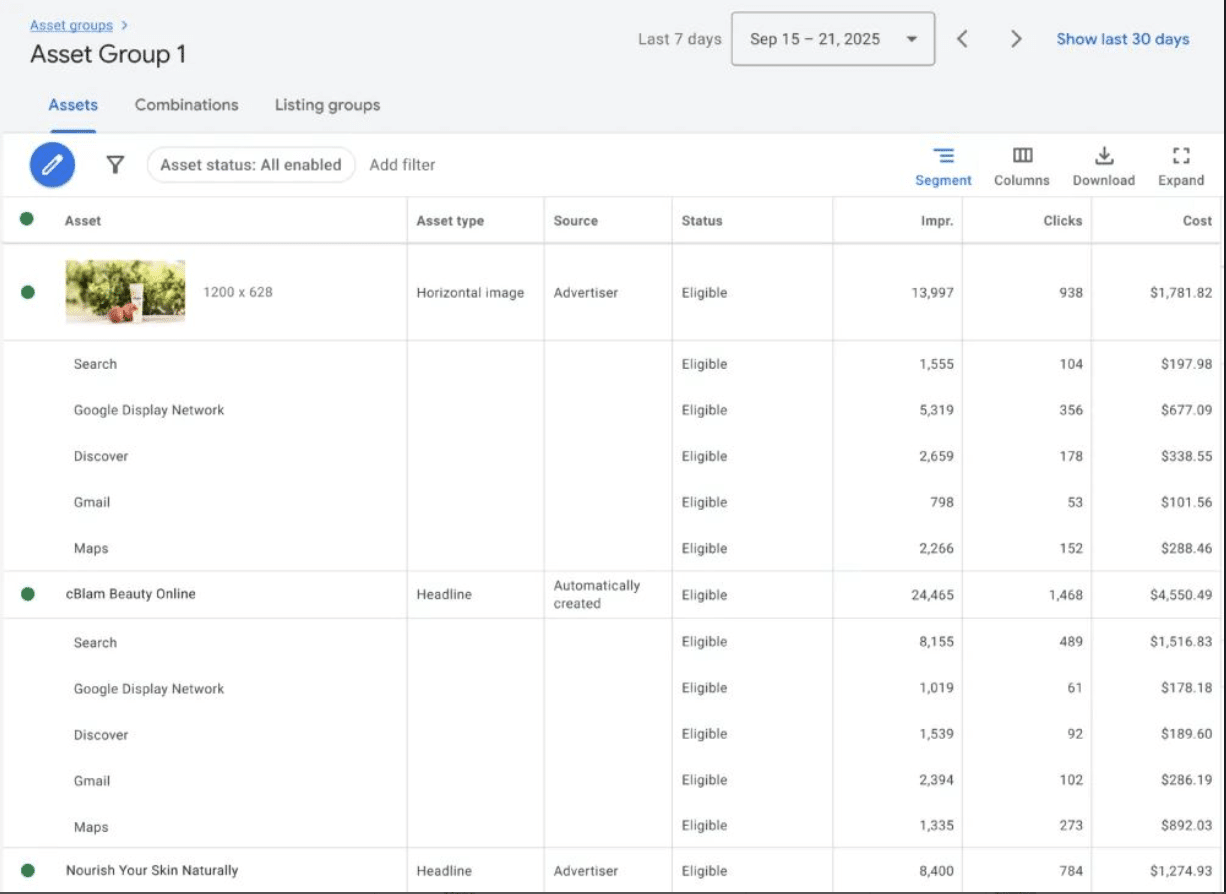
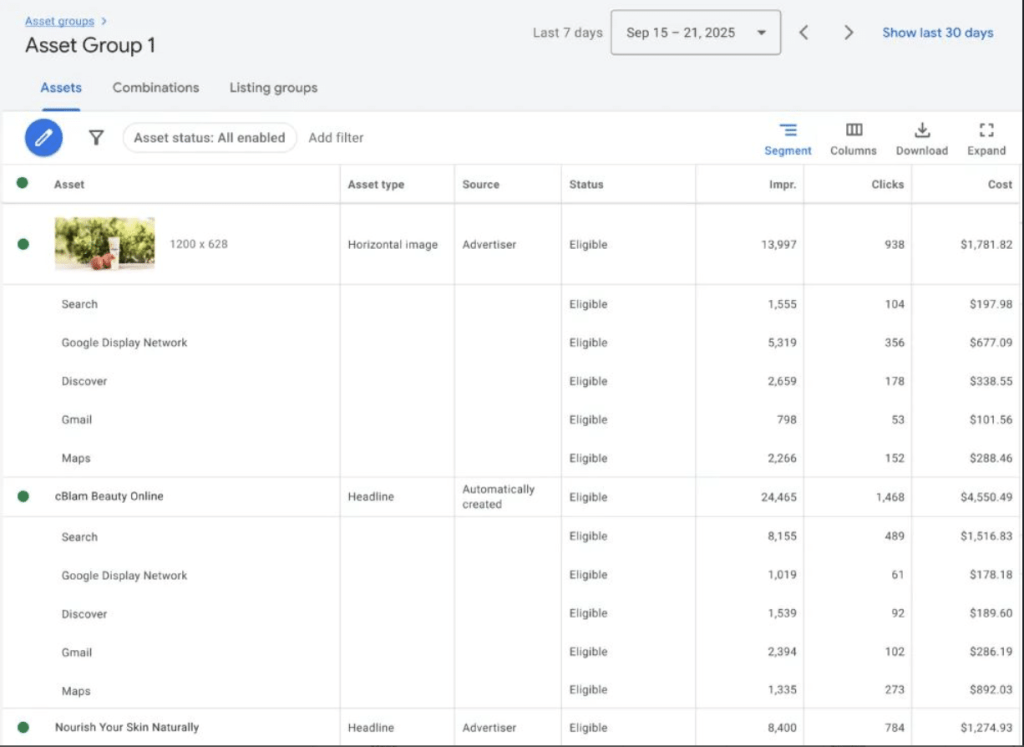
    Google has announced new reporting features for Performance Max, giving advertisers more visibility into how campaigns perform across assets and channels.

    The updates include:

    • Asset-level reporting that can be segmented by device, time, conversion type and network
    • Channel-level reporting with bulk downloads, account-wide insights, ROI columns, and clearer cost allocation.
    • Segmentation by conversion actions and ad event types.
    • Diagnostics to flag issues like limited serving from restrictive bid targets.
    Screenshot of Google Ads reporting dashboard
    Screenshot of Google Ads Performance Max reporting dashboard

    Why this matters to advertisers

    Performance Max has always been powerful, but it’s often felt like a black box. With these changes, advertisers now have a clearer line of sight into what’s actually working. That means:

    • The ability to double down on high-performing assets and cut wasted spend.
    • Smarter budget allocation across channels, backed by clearer ROI data.
    • Faster troubleshooting with diagnostics that show where campaigns are being held back.
    • More confident conversations with clients and stakeholders, because the data behind results is easier to explain.

    Basically, this isn’t just about more data it’s about better decision making. As Performance Max continues to evolve, these upgrades bring us closer to running campaigns with the same level of control and clarity we expect from other Google Ads formats, while still benefiting from automation.

    If you’d like assistance and insights into how to maximise your performance across PMAX and multi-channel paid ads give us a shout.

    Harry Kidby of Numero Agency
    Harry Kidby

    More Resources

    SearchEngineLand article

    Google Ads article

  • Do Small Businesses Need SEO?

    Do Small Businesses Need SEO?

    SEO is a powerful process that has the potential to make the difference between success and failure for your business. As a small business you may think you can’t afford the same marketing as big business. BUT today I’m going to challenge that.

    Some Quick Questions

    1. Are most of your customers local?
    2. Do they live or work near your business location?
    3. Do you trade in a niche industry?

    If your answer to any of these questions is yes, then your business absolutely needs SEO.

    Why SEO Matters for Small Businesses

    This may sound dramatic. But, 50% of people who conduct a local Google search on their smartphone end up visiting a store the same day. Your business needs to in that search result and at the fingertips of local customers. This is one of the biggest competitive advantages local business has.

    This isn’t the only benefit of SEO, though, here are some more

    1. Local SEO delivers long-term return on investment

    Organic SEO should always be part of your long-term marketing strategy. When the time is right, paid campaigns can have a place in the short-term marketing strategy. After all, paid advertising generates clicks and potential customers almost immediately.
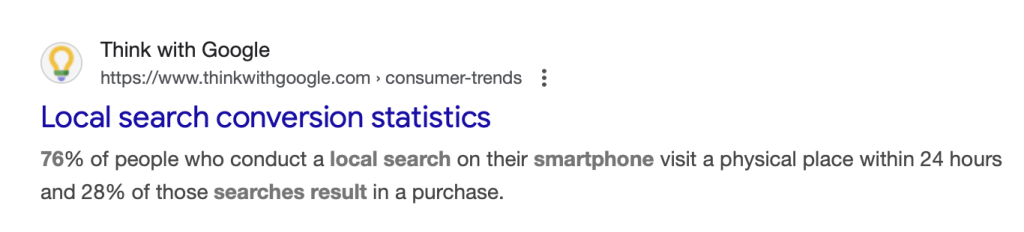
    This is because organic search brings you engaged visitors over the long term. Once you’ve added keywords, links and meta information to your website, they stay there for ever. And you can publish useful content that answers questions (FAQs), informs, and entertains. Then you’ll find customers interact naturally with your website because it shows up in search results.

    As a result, your return on investment from SEO improves over time – the more visitors search and click to your website, the higher it will rank in local search results.

    The same applies to niche businesses. If you are the only firm selling leather saddles for ponies; or kitchen implements for left-handed users – you will get found easily in search results. The more you can present a niche product or a service for a niche audience, the easier your SEO will be. This is one of the ways the internet has “democratised” business – people looking for your niche can find you from overseas.

    2. Customers are making more local searches

    We all prefer using our mobiles rather than desktop computers. The number of hours we spend on the phone each day continues to rise. The search tool lives in your pocket, daily.

    Where does this fit into SEO? Well, according to Google, nearly half of all mobile searches are related to location. As more and more users turn to their smartphones to find out about the world around them with local searches, you need to be there. The best way to get in front of these searchers is through local SEO.

    3. A solid local SEO strategy is key to success

    Check out this statistic:

    • 76% of local searches result in a phone call

    Every local business wants customers and potential customers to get in touch. This lets you start building a relationship early. As 76% of local searches result in a phone call, without SEO you risk losing those relationships.

    A solid, well-structured SEO strategy will put you in front of customers with an immediate need from your business.

    Your Competitors Are Already Doing SEO

    Whichever industry your small business operates in, your competitors are almost certainly involved in Search Engine Optimisation too. The marketing arms race means that if they are doing SEO, you have to do the same or you risk losing customers to them.

    To gain the best advantage, start as early as possible. It takes time to build SEO authority and rankings, and you never know when your competitors are going to power into the picture.

    Remember one thing from this article: SEO is not just for large businesses. Small business owners with local clients and/or niche products and services like you absolutely can benefit.

    Explore more digital marketing strategies

  • I want Tourism NZ as a client

    I want Tourism NZ as a client

    You’ve probably seen the viral post about the UK which American tourist Scott Waters wrote

    I’ve updated it for New Zealand as seen through the eyes of an American Tourist. These insights help showcase the fun differences visitors notice about Godzone.

    And if the Tourism NZ team are reading this…. there are loads more ideas where this one came from.

    100 Observations About New Zealand

    By a Visiting American (AI). 

    Note: These observations come from genuine affection for New Zealand and its people. Any Kiwi reading this probably has 100 observations about Americans that would be equally amusing and accurate. Sweet as, bro.

    woman in yellow bikini snorkelling with fish in New Zealand
    Glass Bottom Boat, Whitianga Source: Tourism NZ Visual Library Credit Miles Holden
    1. Everyone calls it “Kiwi” everything – KiwiBank, Kiwi fruit, Kiwi people. The actual bird is surprisingly grumpy.
    2. They put beetroot on burgers and act like this is completely normal.
    3. “Yeah, nah” means no. “Nah, yeah” means yes. “Yeah, nah, yeah” means maybe.
    4. Their money is colorful, waterproof, and impossible to tear. Ours looks like Monopoly money by comparison.
    5. Jacinda Ardern was more popular in America than most of our own politicians.
    6. They call flip-flops “jandals” and everyone owns at least three pairs.
    7. The country has more sheep than people, but somehow the sheep don’t run things (unlike some places).
    8. Their coffee is so good it makes Starbucks taste like dishwater.
    9. Everyone knows someone who was an extra in Lord of the Rings.
    10. They call cotton candy “fairy floss” which is infinitely more magical.
    11. Their healthcare actually works AND they don’t complain about it as much.
    12. “Sweet as” doesn’t involve sugar – it just means “cool” or “great.”
    13. They have a town called “Hell” and another called “French Pass” – the French one is scarier.
    14. Their bacon is just ham pretending to be bacon.
    15. They say “How’s it going?” but don’t actually wait for an answer.
    16. The All Blacks do a war dance before rugby games and somehow this isn’t considered unsporting.
    17. They have seasons backwards, which means Christmas barbecues actually make sense.
    18. Their national bird can’t fly, their national tree isn’t native, and their most famous residents are hobbits.
    19. Everyone has a “bach” (pronounced “batch”) which is basically a shed by the beach they call a vacation home.
    20. They call swimsuits “togs” and coolers “chilly bins.”
    21. Their accent makes everything sound like a question even when it isn’t?
    22. They have earthquakes regularly and just shrug them off like we do traffic jams.
    23. Their idea of spicy food is adding tomato sauce to everything.
    24. They call gas stations “petrol stations” and act shocked when you don’t know what petrol is.
    25. Everyone drives like they’re late for something, but there’s never actually any traffic.
    26. They have a dessert called “hokey pokey” that has nothing to do with the dance.
    27. Their version of the American dream involves owning property anywhere within 100km of Auckland.
    28. They say “keen” instead of “interested” – “Keen for a coffee?” means “Want coffee?”
    29. They have volcanoes in their backyards and complain about the house prices instead.
    30. Their groceries cost more than a mortgage payment, but the wine is cheaper than water.
    31. Everyone has an opinion about Australian accents but gets offended if you confuse theirs.
    32. They call shopping carts “trolleys” and act like we’re the weird ones.
    33. Their postal service delivers mail with addresses like “Blue house, third farm past the big rock.”
    34. They have a chocolate bar called “Pineapple Lumps” that contains no pineapple.
    35. Their national dessert is meringue with fruit on top and they will fight you over who invented it.
    36. They drive on the left side of the road but their steering wheels are on the right side of the car.
    37. Everyone has a story about nearly hitting a sheep/cow/random farm animal on the highway.
    38. They call trucks “utes” and half of them are held together with number 8 wire and good intentions.
    39. Their idea of Mexican food would make a Taco Bell executive weep.
    40. They have more craft breweries per capita than sense, and we’re here for it.
    41. Everyone knows how to pronounce Māori place names or at least pretends to.
    42. They have a city called “Rotorua” that smells like sulfur but has amazing hot springs.
    43. Their weather changes every five minutes, but they never carry umbrellas.
    44. They call bell peppers “capsicums” and refuse to acknowledge this is wrong.
    45. Everyone has an uncle who lives “up north” or a cousin who moved to Australia.
    46. Their rugby players are treated like gods, their cricket players like mortals.
    47. They have drive-through bottle shops because, priorities.
    48. They call popsicles “ice blocks” and somehow this makes more sense.
    49. Their national airline safety videos are more entertaining than most movies.
    50. Everyone owns a barbecue but calls it a “barbie” without irony.
    51. They have a burger joint called “Fergburger” with queues longer than Disney World.
    52. Their milk comes in glass bottles like it’s 1950, and it tastes better.
    53. They say “chur bro” instead of “thanks dude” and it works.
    54. Their speed limits are suggestions that everyone ignores equally.
    55. They have a mountain called “Mount Maunganui” that’s actually a hill.
    56. Everyone has a wetsuit but only half know how to surf.
    57. Their idea of fine dining includes at least one item with “kumara” (sweet potato) in it.
    58. They call lunch “smoko” even when nobody smokes anymore.
    59. Their politicians actually resign when they mess up (what a concept).
    60. They have a bird that attacks people during nesting season and everyone just accepts this.
    61. Their rental cars come with unlimited mileage because the country is basically one long road trip.
    62. They call McDonald’s “Maccas” with genuine affection.
    63. Everyone has an opinion about the America’s Cup despite never going sailing.
    64. Their rugby team’s silver fern logo is more recognizable worldwide than their actual national flag.
    65. They have a phrase “world famous in New Zealand” which perfectly captures their adorable relationship with global recognition.
    66. They have a town with a 85-letter name that no tourist can pronounce.
    67. Everyone owns gumboots (rain boots) in at least two colors.
    68. Their ATMs apologize when you’re out of money.
    69. They call tornados “dust devils” and act like they’re lawn sprinklers.
    70. Their pharmacies are called “chemists” like they’re mixing potions.
    71. Everyone knows the haka but only performs it at weddings and rugby games.
    72. They have a cookie called “Afghan” that’s not from Afghanistan.
    73. Their elevators are called “lifts” which is more accurate but sounds pretentious.
    74. Everyone has a friend named “Bazza” or “Gazza” or some other nickname ending in “zza.”
    75. They put pineapple on pizza without the controversy we have about it.
    76. Their electricity plugs look like shocked faces.
    77. Everyone owns a puffy jacket in black, and they wear them year-round.
    78. They call ketchup “tomato sauce” and put it on everything, including eggs.
    79. Their idea of Mexican food is putting corn kernels on things.
    80. Everyone has a bach, wants a bach, or knows someone with a bach.
    81. They say “cheers” instead of goodbye, thank you, hello, or basically any social interaction.
    82. Their grocery stores sell single bananas and nobody questions this.
    83. Everyone drives a Toyota and acts like they discovered cars.
    84. They have a drink called “L&P” (Lemon & Paeroa) that tastes like carbonated lemonade.
    85. Their idea of spicy is adding pepper to the salt.
    86. Everyone owns hiking boots but half have never seen a mountain up close.
    87. They call vacuum cleaners “hoovers” regardless of brand loyalty.
    88. Their Christmas songs mention pohutukawa trees instead of pine trees.
    89. Everyone has an opinion about which beach is best despite them all looking identical to outsiders.
    90. They say “no worries” so much it should be the national motto.
    91. Their ice cream flavors include “boysenberry” and “hokey pokey” and somehow this works.
    92. Everyone owns a beanie (they call them “beanies” too) in team colors.
    93. They put butter on sandwiches even when there’s already mayo.
    94. Their radio plays more American music than New Zealand music, but they’re proud of their local bands.
    95. Everyone has a story about meeting someone famous at a pub or café.
    96. They call candy “lollies” and it sounds like they’re talking to children.
    97. Their idea of fine wine involves at least one sauvignon blanc from Marlborough.
    98. Everyone owns a kayak or knows someone who does.
    99. They say “she’ll be right” about everything from broken cars to national disasters.
    100. Their customer service people actually seem happy to help you.
    101. After visiting, you understand why people say it’s “God’s Own Country” – and you’re slightly offended your own country isn’t as nice to live in.
    Logo for Tourism New Zealand