Author: admin

  • 3 Ways To Kick-Start Your Online Marketing Campaign In NZ

    3 Ways To Kick-Start Your Online Marketing Campaign In NZ

    You’re a business owner and you might be feeling the pinch – maybe sales are off or you are seeing inflation and margin erosion. Your thoughts are moving towards doing some marketing as a way to boost sales. If you aren’t confident about where to start and what to expect from different types of marketing activity.

    numero® serves many, many business owners in New Zealand as their marketing agency of choice. We know the questions we get asked when speaking to our prospects, we know the results we can deliver in the first 90 days when we’re working with them. Let us help you with some guidance.

    Online marketing is vital to the success of your business unless you have recurring contracts that sign up year after year without any sales contact needed. If this is you – congratulations – great business model. For the rest of us, we need to bring in new customers. This can be through any type of promotion, marketing or advertising on digital platforms like websites, social media, and email.

    Before you start

    Remember your woodwork teacher in school saying “Measure twice, cut once”?

    Well marketing is the same. First you plan, define a goal and know exactly what type of customer you’re looking to attract. Then do a quick audit of your business online presence – website, social media, reviews, Google Business Profile. What have you got and what is missing? It’s worth logging how many followers or visitors you have on these digital assets now so you’ve got a baseline comparison for the future.
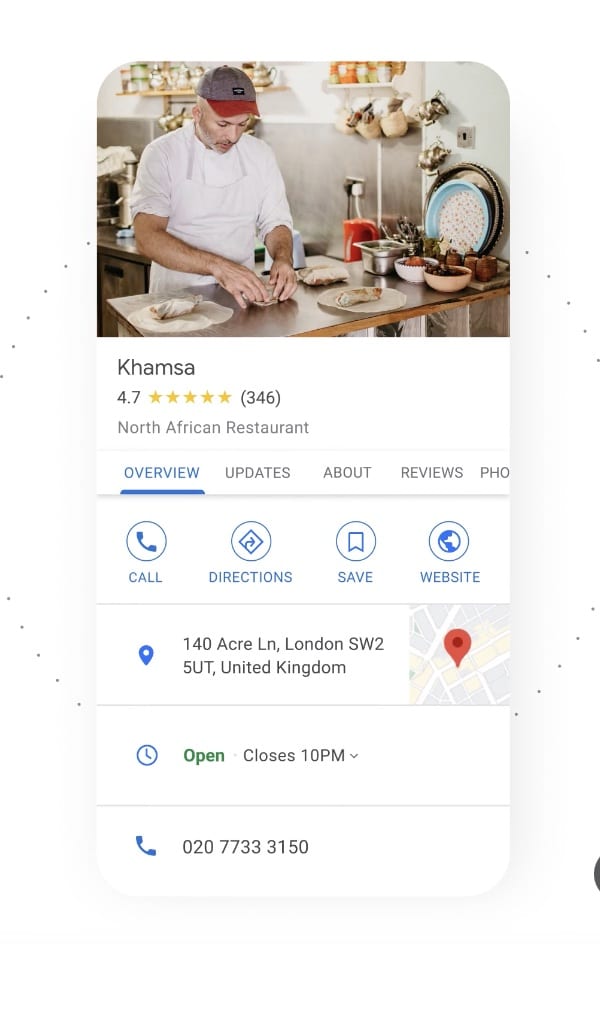
    Screenshot of Google business profile
    Google Business Profile

    Here are three areas of online marketing which are effective in NZ – focus your efforts here for a successful digital marketing endeavour. These are vital tools in your online marketing toolbox.

    Search Engine Optimisation (SEO)

    A cornerstone of online marketing strategies is search engine optimisation. This is any strategy used to drive high quality visitors to your website (unpaid). Specific keywords are selected and used in your website to rank you high up on search engine results. Keywords are the words or phrases that potential customers would use when searching for your type of product or service

    Learn more about SEO services.

    Content Marketing

    When you write or video or photograph anything which is shared online, this called content marketing. We include things like the words (copy) on your web pages, sound bites (podcasts), videos, blogs, articles and social media posts are all forms of content marketing

    The aim of producing such material is to be helpful with advice and sharing your expertise. This attracts the attention of customers and potential customers and leads them to your (digital) door. Here you can tempt them into buying your product or service. This content needs to be fresh, exciting, entertaining, informative or provocative to generate interest from prospects.

    Learn more about website improvements.

    Paid Advertising

    Part of your online marketing should include paid advertising. While it may be nice to think you can do marketing for no cost, the reality is that SEO and content marketing take time to build up a head of steam and product results. Whereas advertising can bring instant results.

    There are many forms that this can take, including:

    • Social media adverts
    • Banner adverts
    • Paid advertising on search engine results pages
    • Pop up adverts
    • Contextual adverts

    In pay-per-click advertising (PPC), potential customers click on your advert which takes them to the website home page or product page. The advantage of this method is that you only pay for each click, so customers who aren’t interested in your offer will be automatically excluded. But, as prospective customers arrive at your website, it is a very effective strategy to get traffic.

    Learn more about digital advertising.

    Contact Numero today to find out how we can help you to set up online marketing campaigns. We are a full service, Google certified digital agency and have a long track record optimising business digital assets that grow sales and profits.

    Resources and further reading

    What does a new website design cost to build?

    What percentage of Google search traffic goes to the top 3 results?
  • What Percentage of the Google Search Traffic Goes to the Top 3 Searches?

    What Percentage of the Google Search Traffic Goes to the Top 3 Searches?

    When it comes to organic online searches, business owners have the same goal – to rank their website at the top of the search engine results pages (SERPs). This is for natural search (not paid).

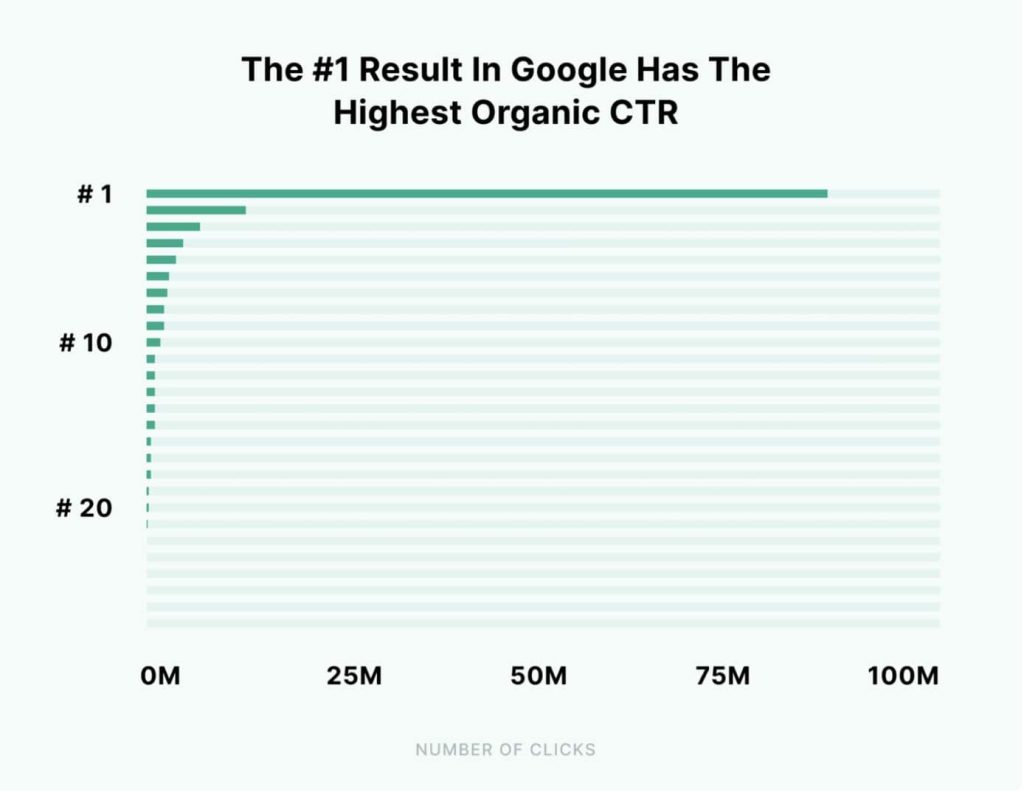
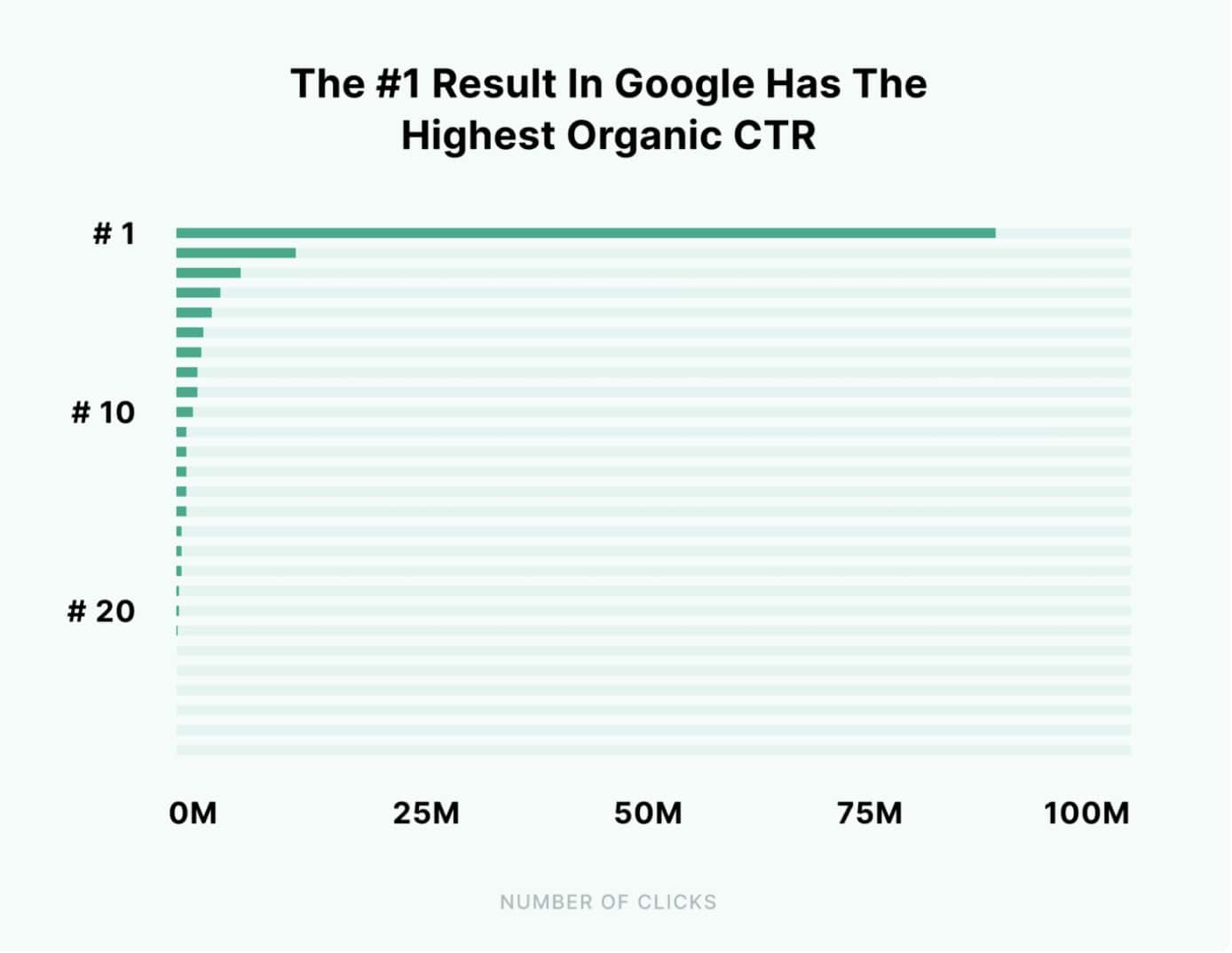
    Although an uphill task, it’s worth pursuing because a top position in the search results supports higher organic click-through rates (CTR). The distribution of clicks on average are:

    Average Click-Through Rates (CTR) for Top Google Results

    • Position 1 – 39.8% average CTR
    • Position 2 – 18.7% average CTR
    • Position 3 -10.20% average CTR

    Source: 2025 study by Backlinko.

    Read the link to see how powerful this top spot is.

    • The number 1 result in the organic SERPs receives an average of 27.6% of the traffic clicks.
    • The top spot is ten times MORE likely to get a click than the tenth spot.
    • Below the top spots, the organic click-rates for positions 8 through 10 are almost the same.
    Graph of click results from Google ranked. Image Credit: Backlinko

    Key factors that can change your ranking

    Remember averages disguise a range – within this are higher and lower results.

    1. Search intent is the most important factor – what people want to find affects where they click. For example, geography [near me], named destination [YouTube], how to advice [boil an egg], and comparison [best running shoes 2025]
    2. Search has many components in the displayed results – featured snippets, Google ads, People also ask PAA boxes, Local Packs for geography, Image and Video Carousels. PLUS the now-ubiquitous AI search results.
    3. Branded compared to non-branded search results – if you name a brand [McDonalds – aka the “Scottish Restaurant”] will get you something very different best burgers in Queenstown [That slot belongs to Ferg Burger if you’re interested].

    Overall the more competitive keywords, the more crowded that top spot becomes as traffic gets siphoned off into paid and other SERP features which Google displays above the organic results.

    Longevity brings advantages

    Some websites have existed for decades and if you’re competing with them you are up against heavyweights who have have unmatched domain authority and a ton of backlinks. They are churning top-quality content and receiving numerous backlinks in turn which reinforces their position.

    Is SERP worth the price you end up paying?

    We know exactly how much time, effort and money a top spot will probably take. Ask us.

    Tips to Improve Your Search Rankings

    If you are starting out just now, you can’t hope to rank on the first page except for ultra-niche searches like your brand name, founder’s name or unique product attributes. But here are some strategies you can consider to improve your rankings in Google.

    • Optimise Your Website Google penalises any page that fails its extracting usability and quality standards. So before you begin to build backlinks or add new content to your website, it’s important to optimise your website for usability.
    • Are there any broken links? Moved images? 404 errors? Fix and update those errors to make your website offers a consistent user experience.
    • Go Mobile-Friendly Look up your website on a mobile device. Do you have to squint or zoom-pinch to be able to read the text? Are the links so small that they don’t recognise your clicks?
    • Build Backlinks these are at the core of improving a website’s search rankings. Search engines look at the anchor text (the text third party websites use when linking back to your website) in a piece of content to assess its relevance to the URL it’s pointing to. If most links use the same anchor text, it can raise suspicion and Google may even penalise you.
    • Google will also consider the quality of the pages that you’re linking to. They must be relevant to your content, whether they lead to another website or a page on your own site.
    • Focus on Gaining Authority Google does not want to compromise the user experience it offers to its searchers. So it won’t rank any website that is not relevant or lacks authority. Your priority should be to establish your authority as a reliable source of information that your users trust. When Google recognises that, you can expect an improvement in your search rankings.

    And remember – all these tactics ALSO work for AI searches and GEO.


    Frequently Asked Questions about Website Revisions

    Q: What types of feedback are most helpful when reviewing a website?

    Specific and actionable feedback works best — highlight the exact element you want changed and explain why. If unsure, ask a question and let designers propose options.

    Q: Can I provide feedback as a video or screen recording?

    Yes! Video feedback helps designers see exactly what you see. Tools like Loom allow you to point out areas and narrate your thoughts clearly.

    Q: What if I’m unsure which design version I prefer?

    It’s fine to request alternate layouts. Designers can provide options, allowing you to choose the one that fits your brand best.

    Q: What happens if feedback is delayed?

    Delays in feedback can hold up the project. Timely input keeps your website build on schedule and avoids launch delays.

    Q: How many revision rounds are included?

    Typically, two revision rounds are included. Additional revisions may incur extra time or costs — check your project brief for details.

    Parting Thoughts

    Your website is the core of your digital presence. To improve your online presence, you must work on search rankings so more people can find you. A numero®, we have years of experience in SEO and can help your site get better search engine rankings in Google.

    Get started today! If you are ready to improve your online visibility, contact us today!

  • Do Small Businesses Need SEO?

    Do Small Businesses Need SEO?

    SEO is a powerful process that has the potential to make the difference between success and failure for your business. As a small business you may think you can’t afford the same marketing as big business. BUT today I’m going to challenge that.

    Some Quick Questions

    1. Are most of your customers local?
    2. Do they live or work near your business location?
    3. Do you trade in a niche industry?

    If your answer to any of these questions is yes, then your business absolutely needs SEO.

    Why SEO Matters for Small Businesses

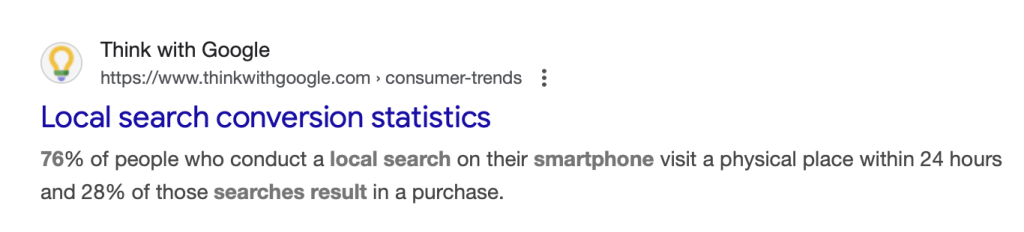
    This may sound dramatic. But, 50% of people who conduct a local Google search on their smartphone end up visiting a store the same day. Your business needs to in that search result and at the fingertips of local customers. This is one of the biggest competitive advantages local business has.

    This isn’t the only benefit of SEO, though, here are some more

    1. Local SEO delivers long-term return on investment

    Organic SEO should always be part of your long-term marketing strategy. When the time is right, paid campaigns can have a place in the short-term marketing strategy. After all, paid advertising generates clicks and potential customers almost immediately.

    This is because organic search brings you engaged visitors over the long term. Once you’ve added keywords, links and meta information to your website, they stay there for ever. And you can publish useful content that answers questions (FAQs), informs, and entertains. Then you’ll find customers interact naturally with your website because it shows up in search results.

    As a result, your return on investment from SEO improves over time – the more visitors search and click to your website, the higher it will rank in local search results.

    The same applies to niche businesses. If you are the only firm selling leather saddles for ponies; or kitchen implements for left-handed users – you will get found easily in search results. The more you can present a niche product or a service for a niche audience, the easier your SEO will be. This is one of the ways the internet has “democratised” business – people looking for your niche can find you from overseas.

    2. Customers are making more local searches

    We all prefer using our mobiles rather than desktop computers. The number of hours we spend on the phone each day continues to rise. The search tool lives in your pocket, daily.

    Where does this fit into SEO? Well, according to Google, nearly half of all mobile searches are related to location. As more and more users turn to their smartphones to find out about the world around them with local searches, you need to be there. The best way to get in front of these searchers is through local SEO.

    3. A solid local SEO strategy is key to success

    Check out this statistic:

    • 76% of local searches result in a phone call

    Every local business wants customers and potential customers to get in touch. This lets you start building a relationship early. As 76% of local searches result in a phone call, without SEO you risk losing those relationships.

    A solid, well-structured SEO strategy will put you in front of customers with an immediate need from your business.

    Your Competitors Are Already Doing SEO

    Whichever industry your small business operates in, your competitors are almost certainly involved in Search Engine Optimisation too. The marketing arms race means that if they are doing SEO, you have to do the same or you risk losing customers to them.

    To gain the best advantage, start as early as possible. It takes time to build SEO authority and rankings, and you never know when your competitors are going to power into the picture.

    Remember one thing from this article: SEO is not just for large businesses. Small business owners with local clients and/or niche products and services like you absolutely can benefit.

    Explore more digital marketing strategies

  • How Much Does SEO Cost in NZ? [2025 Pricing Guide]

    How Much Does SEO Cost in NZ? [2025 Pricing Guide]

    If you’re asking “what does SEO cost in New Zealand?” — you’re not alone. Thousands of Kiwi businesses search for answers every month. The truth? SEO pricing in NZ varies depending on your business size, goals, and the agency you hire.

    Below, we break down the average cost of SEO in New Zealand, so you know what to budget.

    Let’s explore some numbers.

    For in-depth information on what would SEO cost for your business call us at 09 390 3997 to discuss your requirements with an SEO specialist. Book an SEO audit for your website.


    Average SEO Costs in NZ

    Service TypeAverage Cost (NZD)Best For
    Monthly Retainer$1,837 – $6,300+Ongoing SEO for small–medium businesses
    Monthly Retainer$6,850 – $12,900Ongoing SEO for enterprise business
    One-off SEO Project$5,000 – $25,000Website rebuilds, migrations, penalty recovery, or major campaigns 
    Hourly SEO Consulting$150 – $300Strategy sessions, training, audits
    SEO Audit$1,500 – $5,000Businesses wanting a roadmap before investing

    SEO Costs for Small Businesses

    Small businesses in NZ often spend between $1,800 – $3,500 per month on SEO. This typically includes:

    • Keyword research
    • On-page SEO
    • Content optimisation
    • Local SEO (Google Business Profile, maps, citations)
    • Monthly reporting

    Tip: Avoid “cheap SEO” (e.g. $200/month). These usually involve spammy links or outdated tactics that can hurt your rankings.


    SEO Pricing for Enterprise Business & E-commerce

    • Enterprise SEO: $6,850+ per month, due to scale, technical depth, and content demands.
    • E-commerce SEO: Often $3,000+ per month, depending on product range and competition.

    SEO Packages vs. Custom Pricing

    Some NZ agencies advertise “SEO packages” with fixed deliverables. Others (like enterprise agencies) create custom strategies.

    When comparing SEO plans, look beyond the price tag. Ask:

    • How many hours of work are included?
    • Is content creation part of the package?
    • Will you build external links, or is that extra?
    • Do you provide reporting & transparency?

    Why Do SEO Costs Vary So Much?

    • Competition in your industry (e.g. local plumber vs. national e-commerce site).
    • Scope of services (technical SEO, content, backlinks, local SEO, GEO, AI).
    • Agency experience (junior freelancer vs. specialist team).
    • Timeline & goals (ranking in 6 months vs. 18 months).

    How Much Should You Budget for SEO in NZ?

    • Small businesses: $1,000 – $2,500 per month
    • Medium businesses: $2,500 – $5,000 per month
    • Large/enterprise: $5,000+ per month

    The key is ROI: a strong SEO strategy should generate leads or sales that far outweigh the cost.


    FAQ – answers to your SEO questions

    Q: What is the average cost of SEO in New Zealand?
    Most NZ businesses pay between $1,850 – $3,900 per month.

    Q: What’s included in an SEO audit?
    We review your website starting with the words and pictures through to how it is built, the software set-up, internal links, and how fast it loads. Then we start working on your current keywords, blog articles and we do a content analysis. Lastly we look at your search rankings, external links and then review the gaps in your current content and keywords where we can get SEO quick wins for you. All this is written into a detailed report which we send you. 

    Q: How much does a detailed SEO audit cost?
    A one-off SEO audit costs $1,500 – $5,000 depending on website size. If you hire numero® we include an SEO audit AND SEO strategy in your monthly fee. A basic SEO audit is available free of charge to you – register here.

    Q: Is SEO worth it for small businesses?
    Yes. When done properly, SEO drives consistent traffic and leads, often with a higher ROI than ads.

    Q: How long does SEO take to see results?

    The fastest results can come from technical on-page SEO which may show results within weeks because once your website is correctly structured it will be correctly indexed by Google. However, GBP can also be very fast. Content SEO is the next fastest as we build the keyword hierarchy that aligns with your business products. Month by month we add new content – when you have a good back catalogue of content, this becomes more effective as an SEO strategy. Lastly, link building is the long-burn in our SEO services. It works, but not overnight.

    Q: How much does SEO cost for small businesses?
    Small businesses typically spend $1,800 – $2,500 per month for ongoing SEO.

  • The 4 stages of SEO evolution & the AI game changer

    The 4 stages of SEO evolution & the AI game changer

    When the web was young, search engine optimisation was a wild west – back then many, many search engines existed with friendly names like Ask Jeeves and Alta Vista. Most are defunct – you may not know that Yahoo started as a search engine. One of my favourite names was Dogpile – you can imagine who came up with a name like that!

    Once search engine businesses launched to index and create signposts around the world wide web, canny marketers started trying to game the system. They quickly worked out ways to get their websites to appear on the first ten listed results, also known as page 1. This marked the beginning of SEO evolution, a significant shift in the landscape of digital marketing.

    Google only started in 1998 and quickly became the industry leader because they approached search results differently. Their focus on link building (as proof that a site was important because other sites linked to it) rather than keyword matching meant that the answers you got from Google were not only fast, they served to reinforce already-popular websites who had strong inbound links. 

    What is Black Hat SEO?

    Understanding the stages of seo evolution is crucial for leveraging modern strategies in digital marketing.

    Recognizing the importance of understanding the stages of SEO evolution can significantly enhance your strategies and effectiveness in today’s digital marketing environment.

    Unethical and manipulative techniques that have been used to improve website search results, are called “Black Hat”. It’s a wonderful phrase that originated from early cowboy western movies where the baddies wore black hats and the good fellows wore white hats so you could tell them apart!

    Once Google had developed its web bot search spiders to scan web pages, they built a database index of all the websites and links that they could find. This index includes the linkages between sites and assessments of visitor volumes and the frequency of updates with new content and information. Google quickly had a stranglehold on the search industry. And the consequence of this is that once you’re the top dog – you also get to be the policeman.

    Photo by ADESH SRIVASTAVA on Unsplash

    How did AI change SEO in 2024?

    Changes to the Google algorithm affect search results. 

    Over time their engineers have announced major updates to the algorithm – each has a fancy name like Penguin, Florida, and Helpful. Understanding these updates and how they have changed the priority of search results is what has driven the evolution of SEO as a marketing activity. 

    High-profile businesses whose marketing team used black hat techniques got severely penalised after Google updates. Some of the most famous include 

    • BMW (2006) used cloaking and doorway pages of different content for humans vs search engines
    • J.C. Penney (2011) used paid backlinks to manipulate rankings
    • Rap Genius (2013) asked users to embed lyric pages with backlinks in exchange for social shares
    • eBay (2013) created millions of low quality pages such as auto-generated product variants
    • Expedia (2021) used aggressive affiliate linking with keyword-stuffed anchor text

    All these serve to remind us that eventually Google finds you out. Their algorithm updates are often designed to target bad actors demoting them from search results and causing them to publicly apologise and do a lot of work disavowing links and changing web pages in order to regain their rankings. Not a “good look” for a marketing team.

    Put simply, Google may be the policeman, but they are also very clear about what is allowed in their Webmaster Guidelines; you can monitor warnings from your Google Search Console. 

    The AI gamechanger

    Google has been the dominant search engine for the period from 2000 to 2023 when AI again changed the game. Before AI, SEO professionals (like the numero® team) needed to understand 4 things

    1. the search algorithm
    2. the competitive landscape for keywords for each client’s website
    3. technical SEO on websites
    4. ways of writing web content to tick all these boxes.

    Since 1988 we’d visit a search engine and type in our question or search sentence, and results would be delivered as links to websites (natural search results) and as advertisements (from companies advertising against those keywords). No longer.

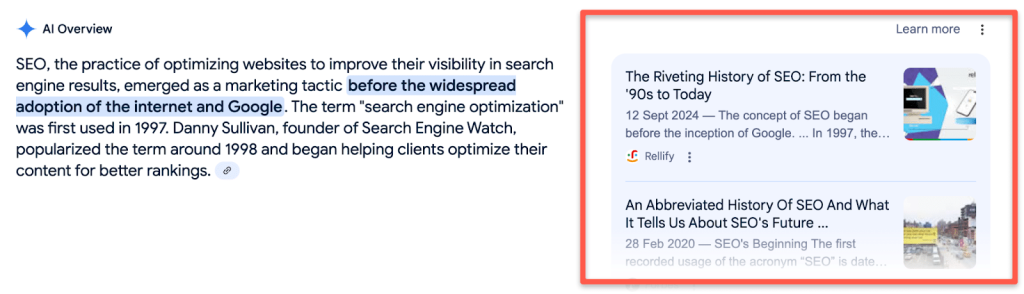
    Today, writing in mid 2025, this has all changed. Many customers experience “zero-click searches” when they use a search engine but never click through to a destination website. Many people only use AI tools like Grok or ChatGPT to get answers which they’d previously got from search results. 

    Read the answer in the AI Overview search result and not need to click anywhere.

    Zero-click GEO search results

    Richard Gilbert, numero’s Founder, described search engines in 2024 as “answer engines” because using voice search means we now expect conversational questions and answers in our search results. 

    I see a future when chatbots provide search answers which may be drawn from multiple sources, not necessarily Google, and these are faster, more personalised and concentrated on the very top websites only. This has implications for non-US business websites and smaller niche businesses who risk never being cited in AI search results. In 2025 numero created a SEO service that neutralises these tendencies.

    The search engine professional has also adapted so that all the Google algorithm changes (RankBrain 2015, BERT 2019, MUM 2021) as well as the Helpful Content Update from 2022 are incorporated into our best practices. Numero prides ourselves on staying at the forefront of SEO evolution, best practice and ethical SEO so that our clients benefit.

    The many changes to SEO marketing have been classified into four stages by Rob Hoffman, Founder at Content Studios. He defined each with a phase in an ebook, the Road to SEO 4.0. 

    • SEO 1.0 Wild West from early 1990s – 2000
    • SEO 2.0 Content is King from mid-2000s – early 2010s
    • SEO 3.0 Machines Start Thinking from mid-2010s – 2020s
    • SEO 4.0 The AI Revolution from 2022 onwards

    These are somewhat helpful for us all to understand because the SEO techniques used in each are different – and many of the methods used in earlier phases are now classified as Black Hat after Google’s algorithm updates specifically outlawed their practices.

    If you are discussing SEO services with a performance marketing agency, take a close look at what they offer to do for you. Not all the early techniques are bad – many are the foundation of best practice SEO today.  But if you’re being offered only SEO 2.0 techniques in 2025, beware.

    SEO techniques through the 4 evolutions of SEO

    These are the top-level SEO methods which align with each of the major development stages since the 1990s. Do ask us to explain any which you need in more detail and context.

    • SEO 1.0 Exact match domains, dense keyword stuffing, link farming, directory listing 
    • SEO 2.0 Low quality, thin, and duplicate content, social media sharing strategies, shareable content, influencer outreach and guest blogging. 
    • SEO 3.0 User-friendly meta titles, descriptions and tags. Mobile first results, conversational queries, and links between people, concepts and place entities. Page experience becomes a ranking factor, complex query resolution, E-A-T for YMYL content, E-E-A-T (Experience, Expertise, Authoritativeness and Trustworthiness) firsthand experience for all content, local SEO and featured snippets
    • SEO 4.0 Programmatic SEO, AI created content, E-E-A-T with verified credentials, citations and peer reviews.SGE delivers answers directly in SERPs followed by Answer Engine Optimisation [link to our blog article]. Vertical search for social, visual and AI search results as well as search engines. 

    While the AI machines have got smarter and faster, so have the AI policemen!

    Any content which is not fact-checked and high quality will not rank well; E-E-A-T is an ever-larger quality signal, and programmatic SEO has to be high quality. Underlying all of this is the deep reliance on user intent signals and website schema markup / structured data. That’s why numero builds websites as well as offering SEO services – the two sit side by side mutually reinforcing each other. Numero continues to see deep advantages for client websites who are SEO optimised. You can be sure we’ll be continuing  to test new SEO methods which help your website to rank well and bring the right sort of customers who are ready to buy.
    CTA.

    Want your website to thrive in the AI era of SEO? Contact us today or explore our SEO solutions for 2025 and beyond.

    Author Expertise: John Anthony Talaguit

    John brings comprehensive digital marketing expertise spanning strategic planning, technical optimisation, and multi-channel execution to numero®’s clients. His core strengths include developing timeline-driven marketing strategies, advanced SEO implementation with schema markup and Core Web Vitals optimisation, and comprehensive Google Analytics tracking. He excels in paid advertising across Google Ads, YouTube, and display networks, whilst maintaining expertise in conversion rate optimisation and email marketing. Technical capabilities encompass WordPress development, mobile-first optimisation, and scripting in HTML, PHP, CSS, and JavaScript. John’s experience extends to social media management, e-commerce optimisation, and cross-team project management, making him a well-rounded digital marketing strategist with strong technical acumen.


  • SEO Optimisation for Parallax Scrolling Websites

    SEO Optimisation for Parallax Scrolling Websites

    Website design and SEO are two things that should go hand-in-hand. You should not include a design feature on your website (parallax scrolling) unless you consider the implication for SEO. Parallax scrolling is a design feature, so how will it impact the SEO of your website? How can you optimise a parallax scrolling website?

    What is Parallax Scrolling?

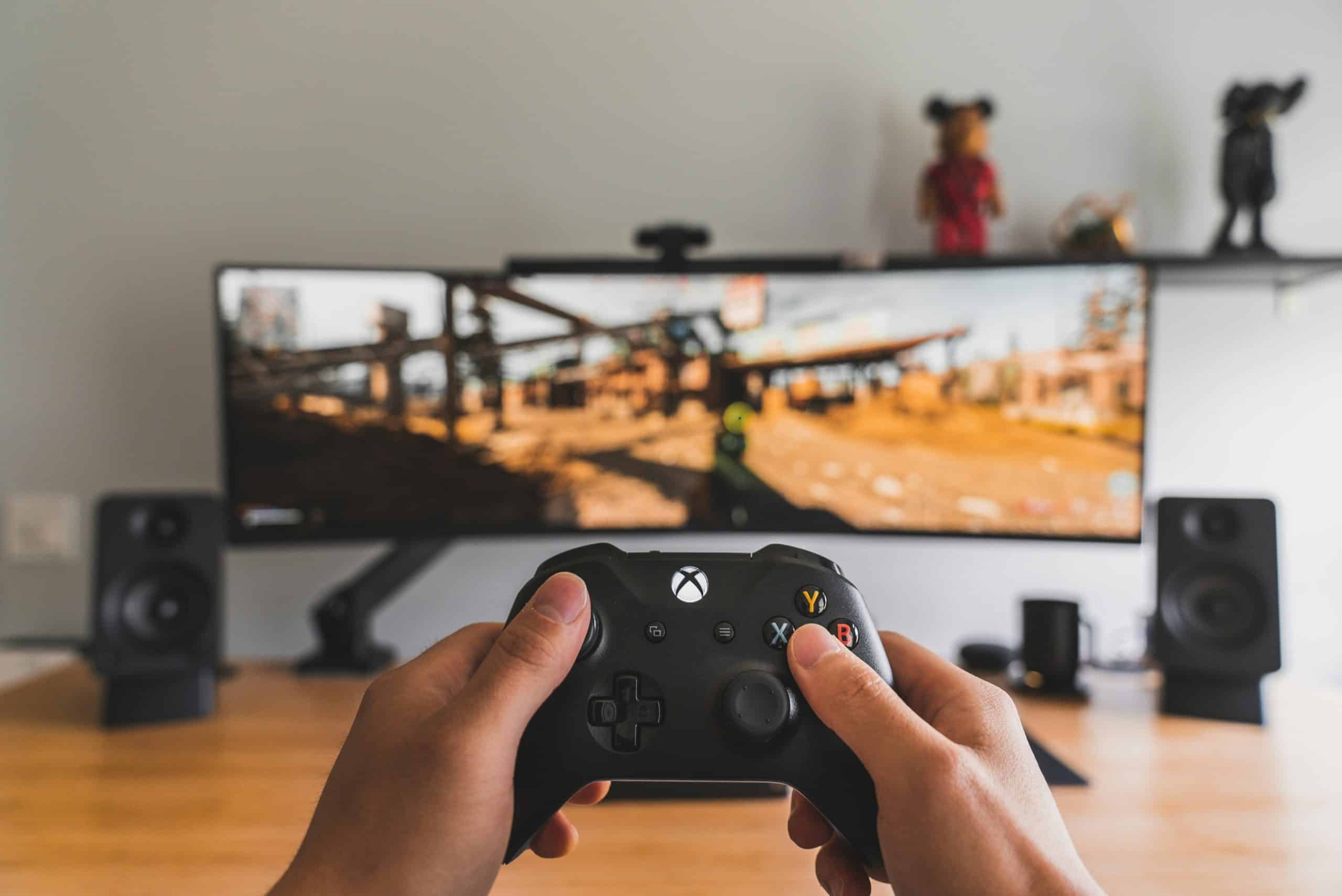
    Parallax scrolling has its origins in video game design. It is a website design technique where the background of the website’s page scrolls slower than the foreground (or content) of the page. So, you can have a background image that scrolls slower than the text on the page.

    The effect is to add depth to the page, making it feel more interactive and making it look almost 3D.

    It is an effect which can be overwhelming and/or distracting when used in the wrong context or when used too much. If implemented for subtlty so that the reader’s focus remains on the content of the page rather than letting a design quirk take over, parallax scrolling can enhance a website and make it more memorable and eye-catching.

    Parallax scrolling website video game
    Photo by Sam Pak on Unsplash

    The SEO Impact of Parallax Scrolling

    Generally, parallax scrolling is not in itself problematic for SEO. The search engine optimisation issues occur in its application.

    There are two ways that website designers use parallax scrolling:

    1. To add a design feature to a page on a website
    2. To make parallax scrolling a central feature of a one-page website

    The first approach is the least problematic. So long as the website has a good SEO architecture, the addition of a parallax scrolling feature to a page will have minimal impact on search engine ranking, although you do need to consider site speed – see below.

    Big problems arise, however, when you use parallax scrolling on one-page websites. The issue isn’t necessarily with the parallax scrolling feature but with the one-page design.

    There is an important factor to point out for any parallax scrolling element on a website – speed.

    Website Speed and Parallax Scrolling

    Parallax scrolling will slow down your website – it really is as simple as that. This could impact the SEO of your website, particularly if you already have a slow loading website. Test your website load speed.

    Where the problem of speed is most acute, however, is on the mobile version of your website. Parallax scrolling can slow down websites viewed on phones considerably, so you should think carefully before adding it.

    One helpful approach is to remove the parallax scrolling effect for anyone viewing your website on a mobile device.

    Why Parallax Scrolling is So Popular on One-Page Websites

    One-page website design is a design approach favoured by some for its minimalist style. You need to overcome the issue of having one long page of content, however. How do you stop the page from becoming boring?

    The solution that many website designers turn to is parallax scrolling. Parallax scrolling helps to break up content and grab the attention of visitors with visual uniqueness.

    In other words, it can be the difference between a one-page website design that is flat, uninspiring, and boring, and a website that works and visitors love (notwithstanding the speed caveat mentioned above).

    What’s the Problem with One-Page Websites?

    Parallax scrolling can make one-page websites work from a user’s perspective, but single page websites are problematic for SEO. This is because Google views them as one-page websites. While you might think that’s the whole point, this is not what search engines want.

    Instead, search engines want each section of your website (i.e. each section of your one-page website design) to have its own page and information. This helps give Google a better understanding of the content on the page and where it fits into its search results. It also allows one unique URL for each section. One page websites only have one URL.

    To get the best results, you should abandon the idea of a one-page website altogether, giving your website a multi-page site architecture instead. You can then add the parallax scrolling design feature to individual pages wherever you think it will enhance the user experience.

    You Want to Stick with a One-Page Design?

    What if you want to stick with a one-page design that uses parallax scrolling? This will never be as good as having multiple pages, but there are some things you can do to improve the SEO of your site.

    Create sections of content. This could be About Us, Services, Contact, etc. Most one-page websites have a menu that lets users jump to these specific sections on the page.

    Google doesn’t treat the links to these sections as separate URLs, but you can use workarounds. Specifically, you can use code that makes your website appear to Google as multiple pages with each page having its own unique content, page title, and meta description.

    This will enable Google to more effectively index your website which, in turn, helps ensure your website appears on searches for your priority keywords.

    The way to achieve this is to use Google’s guidelines for pages with infinite scroll. Infinite scroll pages and one-page websites with parallax scrolling are different, but the solution for infinite scrolling pages will optimise your site for Google search.

    Importantly, it will improve the SEO of your website while maintaining the one-page design for users. Therefore, you get the design features you want – one-page design with parallax scrolling functionality – while ensuring your site has the SEO structure it needs.

    SEO Optimisation Checklist for Parallax Websites

    • Compress background images to WebP
    • Disable parallax on mobile
    • Lazy-load background visuals
    • Serve content with proper HTML structure
    • Implement infinite scroll SEO guidelines
    • Create unique meta tags for each “virtual page”
    • Use jump links with descriptive anchors
    • Add schema for improved indexing

    Final Thought – Analytics

    This solution doesn’t solve all the issues with one-page websites that have parallax scrolling. The biggest is analytics.

    The analytics data you get from a one-page website is restricted to a single page. This means you can’t drill into the performance of each section of your website. You don’t know how many people clicked on each product or service section. Chunking your one-page website into different sections for SEO will not change that. This is a huge limitation for modern digital marketing and advertising. If you have an advert for one of your services, the destination URL will be the same as an advert for your contact us or about page. Not a good customer experience and likely to waste marketing dollars.

    Find out how an expert website designer can help you upgrade your website. Think about when you last updated your website (most businesses do a substantial redesign every 3 years). Each time a website gets upgraded, new functionality is added. You may be missing out on modern website functionality which could be helping your business sales growth. Contact Numero’s Experts Now for a no-obligation appraisal of your website.

  • SEO Optimisation of Parallax Scrolling Websites

    SEO Optimisation of Parallax Scrolling Websites

    SEO Optimisation of Parallax Scrolling Websites

    Website design and SEO are two things that should go hand-in-hand. In other words, you should not include a design feature on your website unless you consider the implication for SEO. Parallax scrolling is a design feature, so how will it impact the SEO of your website? How can you optimise a parallax scrolling website?

    What is a Parallax Scrolling?

    Parallax scrolling has its origins in video game design. It is a website design technique where the background of the website’s page scrolls slower than the foreground (or content) of the page. So, you could have a background image that will scroll slower than the text on the page.

    The effect is to add depth to the page, making it feel more interactive and making it look almost 3D.

    It is an effect, however, and it can be overwhelming and/or distracting when used in the wrong context or when used too much. When used subtly, however, and when the focus remains on the content of the page rather than letting a design quirk take over, parallax scrolling can enhance a website and make it more memorable and eye-catching.

    The SEO Impact of Parallax Scrolling

    Generally, parallax scrolling is not, in itself, problematic for SEO. The search engine optimisation issues occur in its application.

    There are two ways that website designers use parallax scrolling:

    1. To add a design feature to a page on a website
    2. To make parallax scrolling a central feature of a one-page website

    The first approach is the least problematic. So long as the website has a good SEO architecture, the addition of a parallax scrolling feature to a page will have minimal impact on search engine ranking, although you do need to consider site speed – see below.

    Big problems arise, however, when you use parallax scrolling on one-page websites. The issue isn’t necessarily with the parallax scrolling feature but, with the fact the website has a one-page design.

    We’ll come to the issue of one-page parallax scrolling websites in a moment, but there is an important factor to point out for any parallax scrolling element on a website, even if it’s a design feature on a single page of a multi-page website – speed.

    Website Speed and Parallax Scrolling

    Parallax scrolling will slow down your website – it really is as simple as that. This could impact the SEO of your website, particularly if you already have speed issues.

    Where the problem of speed is most acute, however, is on the mobile version of your website. Parallax scrolling can slow down websites viewed on phones considerably, so you should think carefully before adding it.

    One helpful approach is to remove the parallax scrolling effect for anyone viewing your website on a mobile device.

    Why Parallax Scrolling is So Popular on One-Page Websites

    Back to one-page websites and why parallax scrolling is so popular.

    One-page website design is a design approach favoured by some for its minimalist style. You need to overcome the issue of having one long page of content, however. How do you stop the page from becoming boring?

    The solution that many website designers turn to is parallax scrolling. Parallax scrolling helps to break up content and grab the attention of visitors with visual uniqueness.

    In other words, it can be the difference between a one-page website design that is flat, uninspiring, and boring, and a website that works and visitors love (notwithstanding the speed caveat mentioned above).

    What’s the Problem with One-Page Websites?

    Parallax scrolling can make one-page websites work from a user’s perspective, but single page websites are problematic for SEO. This is because Google views them as one-page websites. While you might think that’s the whole point, this is not what search engines want.

    Instead, search engines want each section of your website (i.e. each section of your one-page website design) to have its own page and information. This helps give Google a better understanding of the content on the page and where it fits into its search results.

    So, to get the best results, you should abandon the idea of a one-page website altogether, giving your website a multi-page site architecture instead. You can then add the parallax scrolling design feature to individual pages wherever you think it will enhance the user experience.

    What If You Want to Stick with a One-Page Design?

    What if you want to stick with a one-page design that uses parallax scrolling? This approach will never be as good as having multiple pages, but there are some things you can do to improve the SEO of your site.

    While you won’t have multiple pages on a one-page website, you will have sections of content. This could be About Us, Services, Contact, etc. Most one-page websites have a menu that lets users jump to these specific sections on the page.

    Google doesn’t treat the links to these sections as separate URLs, but you can use workarounds. Specifically, you can use code that makes your website appear to Google as multiple pages with each page having its own unique content, page title, and meta description.

    This will enable Google to more effectively index your website which, in turn, helps ensure your website appears on searches for crucial keywords.

    The way to achieve this is to use Google’s guidelines for pages with infinite scroll. Infinite scroll pages and one-page websites with parallax scrolling are different, but the solution for infinite scrolling pages will optimise your site for Google search.

    Importantly, it will improve the SEO of your website while maintaining the one-page design for users. Therefore, you get the design features you want – one-page design with parallax scrolling functionality – while ensuring your site has the SEO structure it needs.

    Final Thought – Analytics

    The above solution doesn’t solve all the issues that exist with one-page websites that have parallax scrolling. The biggest is the problem of analytics.

    The analytics data you get from a one-page website is restricted to a single page. This means you can’t drill into the performance of each section of your website. Chunking your one-page website into different sections for SEO will not change that.

    Summary

    In summary, many people like the parallax scrolling feature, but it does have implications for SEO. Make sure you take the necessary steps to optimise your site if you choose to implement parallax scrolling.


    Contact Numero Now

  • These Digital Marketing Agency Tools In Auckland Will Get You Noticed Online

    These Digital Marketing Agency Tools In Auckland Will Get You Noticed Online

    All the hype is about SEO and SEM and how to use these tools to get companies noticed online and drive traffic to their door. But there are other tools that a digital marketing agency in Auckland will employ as part of your online marketing campaign.

    Read on to find out what other techniques can be employed to generate leads to convert into sales.

    Social Media Marketing

    With over four million active social media users in New Zealand, social media marketing is a must, especially for e-commerce sites. Facebook, Twitter, LinkedIn, Instagram and Pinterest are all excellent choices considering their high volume of users.

    Establishing a profile of your target audience is essential when deciding which social platforms to use for your campaign. It is wise to concentrate your efforts on only one or two platforms; otherwise, you risk spreading your resources too thinly and having inadequate coverage on too many platforms.

    Your digital marketing agency in Auckland can steer your efforts in the right direction to benefit from this ever-growing marketing opportunity.

    Content Marketing

    Your digital marketing agency in Auckland will tell you what a valuable tool content marketing is. It involves creating and sharing various materials online, including blogs, videos, podcasts, social media posts and newsletters. This content aims to engage, inform and attract users to your products and services by boosting your brand’s image.

    By consistently producing high-quality content, not only will you engage your potential customer but also help you to build up a loyal customer base that returns to your pages and sites seeking your new content.

    To yield reliable results, there needs to be a commitment to a long-term strategy of producing high-quality content on an ongoing basis.

    Email Marketing

    Despite being around for a long time, your digital marketing agency in Auckland will tell you that email marketing is still an extremely effective advertising tool. It allows you to build a relationship with customers by supplying them with valuable information via email.

    Examples of the types of emails you can use for this purpose include:

    • Informative newsletters
    • New or updated product and service notifications
    • Invitations to events such as product launches
    • Seasonal campaigns
    • Confirmation emails (for subscriptions, purchases, deliveries)
    • Invitations to connect with you on your social media platforms

    Avoid overloading your recipients with too many emails or irrelevant material; this is a sure way to lead them to hit the unsubscribe button.

    Contact Numero today for all your online marketing requirements. We are a leading digital marketing agency in Auckland and can help you build your online presence with pleasing results.

  • Facebook Marketing 101

    Facebook Marketing 101

    With over 2.7 billion monthly active users, Facebook is the most popular social media platform. So Facebook marketing should be a top priority for your business.

    Take a look at these statistics:

    The point is that consumers are searching for businesses on Facebook. A well-defined Facebook marketing strategy can help you to reach this audience.

    Why Use Facebook Marketing?

    • Highly targeted – Facebook ads allow you to choose the people you want to target based on interests, age, behaviour, gender and location. If you have a good idea about your target audience, Facebook is an excellent platform to engage them.
    • Economical – Facebook is one of the most cost-effective advertising channels. You could literally spend $10 and reach 2,000 people.
    • Quick results – Facebook marketing delivers immediate results. You can begin by reaching thousands of people right away.
    • Increase brand awareness – Facebook marketing is a wonderful way to reach out to people and show them what you have to offer. The more familiar your audience is with your brand, the more likely are they to choose you when they are ready to make a purchase.
    • Measurable results – With Facebook marketing, you can measure the results effortlessly. You can see the number of impressions, clicks as well as conversions your ads received. To track conversions, you will have to install conversion pixels on your website.
    • Build your list – You can use Facebook marketing to boost your email marketing strategy. You can use the “lead ad” forms feature to capture email addresses with Facebook ads. You can even direct traffic to a third-party form on your site to build the list.
    • Wide range of ad formats – With 10 ad formats, Facebook offers the most diverse range of options. Each ad format allows you to combine text and visuals to describe and showcase your brand.

    Creating a Facebook Marketing Strategy

    Identify Your Target Audience

    When you want to effectively engage your audience, it’s important to know who your target customer is. Ask these questions to begin with:

    • How old are my target customers?
    • Where do they live?
    • What are their pain points?
    • When and how do they use Facebook?

    Once you have answered these questions, head to Facebook Audience Insights to narrow your audience further. You can use Audience Insights to find information on aspects like gender, age, education, location, relationship status, language, past purchase activity and Facebook usage.

    Set Your Goal

    The next big step is to define your goals. Without a definitive goal, you are simply aiming in the dark. Use can map your progress against this roadmap to measure the success of your Facebook marketing strategy.

    For your marketing strategy to be effective, you must have a clearly defined goal that aligns with your business objectives.

    The goals differ from business to business. But aim for actions that can have a direct impact on your bottom line. Here are some examples:

    • Increase the quality of sales
    • Generate leads
    • Improve customer service
    • Increase website conversions

    Once you have a broad goal in mind, it’s time to reach a specific, measurable goal.

    Plan Your Content Strategy

    Now it’s time to decide how you will achieve your goal.

    A critical step in this process is to determine the content mix. We suggest you begin with the 80-20 rule. That is:

    • Use 80% of the posts to educate, inform and entertain
    • Use 20% of the posts to advertise your brand/products/services.

    Bear in mind that the Facebook algorithm may penalise brands that are extremely sales-oriented. The platform wants you to offer content that its users will want to Like and Share.

    Optimise Your Facebook Page for Engagement

    For you to achieve your Facebook marketing goals, you must ensure your brand is easy to find on Facebook. And once your audience is on your page, it should be compelling enough for them to Like it.

    You can choose from premade templates to optimise your page to suit your business best. Each template features unique tabs and buttons optimised for that business type.

    If you provide a professional service, a call to action is an important element. Choose one that can help achieve your goals.

    If you are a brick and mortar or local business, adding your address can ensure search engines can index your page and show it in local search results.

    Identify Your Facebook Ads Strategy

    Whether you’ve just started your presence on Facebook or you have been managing your page for a while, you can’t escape the need to advertise for brand exposure.

    Aim to increase brand awareness. To this end, your ads should always be:

    • Cost-effective – Keep within the monthly/weekly budget you’ve allocated for Facebook ads. This way, you can steer clear of over-exposure and wasteful clicks. Ad spend can go up in no time when your targeting is ineffective or incorrect.
    • Relevance – We can’t emphasise enough the importance of keeping your Facebook ads relevant. Be sure to customise your audience to reach customers who’d best fit your content.

    Keep your ads fresh. It’s important to ensure your content doesn’t get stale with your audience. To that end, be sure to repurpose and update your ads once every week or fortnight.

    Track and Analyse the Results

    The final step of your Facebook marketing strategy is to keep a track of the metrics and assess the results. You can rely on a range of tools including Facebook Insights and SproutSocial to track the results.

    Final Thoughts

    These steps will help you kick-start your Facebook marketing plan today. Should you need professional help with Facebook marketing, get in touch with our specialists today. With years of experience in Facebook marketing, we can help you achieve your marketing goals with a customised marketing strategy.

  • Why It’s Important to Ask Your Web Designer in Tauranga to Implement Local SEO

    Why It’s Important to Ask Your Web Designer in Tauranga to Implement Local SEO

    If you have a brick-and-mortar premises for your business, or if you simply rely on local customers, you should ensure that your web designer in Tauranga has fully optimised your site for local SEO. Local SEO is slightly different to traditional SEO as it focuses mostly on your location and helps nearby customers come across your website when making searches with their location on or by using localised keywords.

    What Details do You Need to Provide Your Web Designer in Tauranga with? 

    If you want to help your web designer in Tauranga do the best possible job for your local SEO, you want to ensure that you provide them with the correct following details:

    • Your business address if you have one
    • Directions to your business premises
    • Your opening hours
    • Phone number
    • Customer reviews if you have anything
    • Your target market (perhaps you want to target customers from surrounding areas too)

    They are then able to implement this information onto your site, as well as local business directories, in the best possible way.

    Tauranga can be quite competitive when it comes to optimising for local SEO, across all industries. That’s why you want to ensure that you are working with true professionals that have your brand’s best interest at heart.

    Some Local SEO Strategies Used by SEO Experts and Web Designers

    Some of the local SEO strategies that are used by SEO experts and web designers alike are:

    • Incorporating localised keywords into blogs and web copy throughout your site
    • Listing your business info in local directories
    • Making use of Google My Business
    • Customer review generation and encouraging customers to make more reviews

    Do All Web Designers in Tauranga Offer SEO/ Local SEO Services?

    While we can’t speak for all web designers in Tauranga, here at Numero, we take SEO very seriously and take pride in creating websites that are fully optimised for SEO and local SEO. We really care about the success of your business and want your brand to experience the incredible benefits of having a fully optimised website.

    Some web designers only focus on the web design aspects of a website and do not have the skills to implement certain SEO strategies, but not at Numero. We do it all!

    Looking for a trusted web designer for your business in Tauranga? We’d love to handle all of your web design needs! Get in touch with us today on 0800 897 605.