When it comes to organic online searches, business owners have the same goal – to rank their website at the top of the search engine results pages (SERPs). This is for natural search (not paid).
Although an uphill task, it’s worth pursuing because a top position in the search results supports higher organic click-through rates (CTR). The distribution of clicks on average are:
Average Click-Through Rates (CTR) for Top Google Results
Read the link to see how powerful this top spot is.
The number 1 result in the organic SERPs receives an average of 27.6% of the traffic clicks.
The top spot is ten times MORE likely to get a click than the tenth spot.
Below the top spots, the organic click-rates for positions 8 through 10 are almost the same.
Graph of click results from Google ranked. Image Credit: Backlinko
Key factors that can change your ranking
Remember averages disguise a range – within this are higher and lower results.
Search intent is the most important factor – what people want to find affects where they click. For example, geography [near me], named destination [YouTube], how to advice [boil an egg], and comparison [best running shoes 2025]
Search has many components in the displayed results – featured snippets, Google ads, People also ask PAA boxes, Local Packs for geography, Image and Video Carousels. PLUS the now-ubiquitous AI search results.
Branded compared to non-branded search results – if you name a brand [McDonalds – aka the “Scottish Restaurant”] will get you something very different best burgers in Queenstown [That slot belongs to Ferg Burger if you’re interested].
Overall the more competitive keywords, the more crowded that top spot becomes as traffic gets siphoned off into paid and other SERP features which Google displays above the organic results.
Longevity brings advantages
Some websites have existed for decades and if you’re competing with them you are up against heavyweights who have have unmatched domain authority and a ton of backlinks. They are churning top-quality content and receiving numerous backlinks in turn which reinforces their position.
Is SERP worth the price you end up paying?
We know exactly how much time, effort and money a top spot will probably take. Ask us.
Tips to Improve Your Search Rankings
If you are starting out just now, you can’t hope to rank on the first page except for ultra-niche searches like your brand name, founder’s name or unique product attributes. But here are some strategies you can consider to improve your rankings in Google.
Optimise Your Website Google penalises any page that fails its extracting usability and quality standards. So before you begin to build backlinks or add new content to your website, it’s important to optimise your website for usability.
Are there any broken links? Moved images? 404 errors? Fix and update those errors to make your website offers a consistent user experience.
Go Mobile-Friendly Look up your website on a mobile device. Do you have to squint or zoom-pinch to be able to read the text? Are the links so small that they don’t recognise your clicks?
Build Backlinks these are at the core of improving a website’s search rankings. Search engines look at the anchor text (the text third party websites use when linking back to your website) in a piece of content to assess its relevance to the URL it’s pointing to. If most links use the same anchor text, it can raise suspicion and Google may even penalise you.
Google will also consider the quality of the pages that you’re linking to. They must be relevant to your content, whether they lead to another website or a page on your own site.
Focus on Gaining Authority Google does not want to compromise the user experience it offers to its searchers. So it won’t rank any website that is not relevant or lacks authority. Your priority should be to establish your authority as a reliable source of information that your users trust. When Google recognises that, you can expect an improvement in your search rankings.
Frequently Asked Questions about Website Revisions
Q: What types of feedback are most helpful when reviewing a website?
Specific and actionable feedback works best — highlight the exact element you want changed and explain why. If unsure, ask a question and let designers propose options.
Q: Can I provide feedback as a video or screen recording?
Yes! Video feedback helps designers see exactly what you see. Tools like Loom allow you to point out areas and narrate your thoughts clearly.
Q: What if I’m unsure which design version I prefer?
It’s fine to request alternate layouts. Designers can provide options, allowing you to choose the one that fits your brand best.
Q: What happens if feedback is delayed?
Delays in feedback can hold up the project. Timely input keeps your website build on schedule and avoids launch delays.
Q: How many revision rounds are included?
Typically, two revision rounds are included. Additional revisions may incur extra time or costs — check your project brief for details.
Parting Thoughts
Your website is the core of your digital presence. To improve your online presence, you must work on search rankings so more people can find you. A numero®, we have years of experience in SEO and can help your site get better search engine rankings in Google.
Get started today! If you are ready to improve your online visibility, contact us today!
SEO is a powerful process that has the potential to make the difference between success and failure for your business. As a small business you may think you can’t afford the same marketing as big business. BUT today I’m going to challenge that.
Some Quick Questions
Are most of your customers local?
Do they live or work near your business location?
Do you trade in a niche industry?
If your answer to any of these questions is yes, then your business absolutely needs SEO.
Why SEO Matters for Small Businesses
This may sound dramatic. But, 50% of people who conduct a local Google search on their smartphone end up visiting a store the same day. Your business needs to in that search result and at the fingertips of local customers. This is one of the biggest competitive advantages local business has.
This isn’t the only benefit of SEO, though, here are some more
1. Local SEO delivers long-term return on investment
Organic SEO should always be part of your long-term marketing strategy. When the time is right, paid campaigns can have a place in the short-term marketing strategy. After all, paid advertising generates clicks and potential customers almost immediately.
This is because organic search brings you engaged visitors over the long term. Once you’ve added keywords, links and meta information to your website, they stay there for ever. And you can publish useful content that answers questions (FAQs), informs, and entertains. Then you’ll find customers interact naturally with your website because it shows up in search results.
As a result, your return on investment from SEO improves over time – the more visitors search and click to your website, the higher it will rank in local search results.
The same applies to niche businesses. If you are the only firm selling leather saddles for ponies; or kitchen implements for left-handed users – you will get found easily in search results. The more you can present a niche product or a service for a niche audience, the easier your SEO will be. This is one of the ways the internet has “democratised” business – people looking for your niche can find you from overseas.
2. Customers are making more local searches
We all prefer using our mobiles rather than desktop computers. The number of hours we spend on the phone each day continues to rise. The search tool lives in your pocket, daily.
Where does this fit into SEO? Well, according to Google, nearly half of all mobile searches are related to location. As more and more users turn to their smartphones to find out about the world around them with local searches, you need to be there. The best way to get in front of these searchers is through local SEO.
3. A solid local SEO strategy is key to success
Check out this statistic:
76% of local searches result in a phone call
Every local business wants customers and potential customers to get in touch. This lets you start building a relationship early. As 76% of local searches result in a phone call, without SEO you risk losing those relationships.
A solid, well-structured SEO strategy will put you in front of customers with an immediate need from your business.
Your Competitors Are Already Doing SEO
Whichever industry your small business operates in, your competitors are almost certainly involved in Search Engine Optimisation too. The marketing arms race means that if they are doing SEO, you have to do the same or you risk losing customers to them.
To gain the best advantage, start as early as possible. It takes time to build SEO authority and rankings, and you never know when your competitors are going to power into the picture.
Remember one thing from this article: SEO is not just for large businesses. Small business owners with local clients and/or niche products and services like you absolutely can benefit.
When you want to drive long term website traffic, reach a larger audience and generate more leads/sales, search engine optimisation (SEO) is the perfect strategy. SEO is not a one-size-fits-all service because businesses differ in their needs (immediate results vs long term) and their marketing sophistication (how many different types of marketing you do each month) as well as marketing budgets (how much should you spend on marketing?).
SEO is a specialist skill – yes you can learn how to do it yourself (Google offers free training courses) yet hiring an expert will get you results faster and without the rookie mistakes. It’s also a fast-moving discipline with new techniques being introduced regularly. The most recent is GEO (Generative Engine Optimisation) – which ensures AI tools like ChatGPT and Google AI cite your content as sources – read the numero® ebook on this.
When you want to hire an SEO agency, you need to know how much SEO costs and what you get for your money.
In this post, we will help you to understand the cost of SEO so you clearly know how much to pay when you hire a professional SEO agency such as Numero.
Let’s explore some numbers.
Read on for in-depth information or call us at 09 390 3997 to discuss your unique requirements with an SEO specialist.
How Much Does Business SEO Cost?
The average cost of search engine optimisation in New Zealand is $1,850 to $6,000 per month. This covers micro businesses (1-3 people) up to medium sized businesses (20+ people). For one-off SEO projects, the cost can range anywhere between $5,000 to $25,000 depending on the size of the job and the specific details.
Small businesses can expect to pay an $150 to $300 an hour for SEO services.
What Affects the Cost of SEO?
A variety of factors influence the average cost of SEO services such as:
The agency’s pricing model (hourly, retainer, length of contract)
The agency’s experience (solo freelancer, 2 years experience up to 10 years plus)
The goals of your SEO strategy (quick increase in sales leads vs long term web visibility)
The timeline of your SEO campaign (3 months versus 18 months plus)
The software, tools or resources required (your website has 10 pages or 1000s of pages)
When looking at SEO costs, it’s important to note that search engine optimisation is a long-term investment. SEO does not produce instant results. By investing in a well-designed SEO strategy, you are improving the visibility of your website, which will drive more traffic, leads and sales for your business.
In comparison to other online marketing strategies such as social media marketing and PPC, SEO will deliver powerful results for your business over the long-term. It will keep delivering a high ROI week after week whereas PPC will stop delivering results the moment you stop paying for the advertising campaign.
When comparing the costs of SEO, look for an experienced SEO agency rather than searching for the cheapest service. Low-cost SEO will not do your business any good. It will cause harm if shortcuts, link farms and other “black hat” SEO techniques are used. This will get your website in trouble, and attracting Google penalties and instant removal from search results. If you aren’t expert in SEO you will find it hard to spot this malpractice happening until it’s too late and Google has penalised your website removing it from search results.
How Much Does SEO Cost Per Project, Month and Hour?
SEO agencies price their services differently, and no two companies will quote the same rate. Your business model, company size and SEO requirements will determine the size and scope of your SEO strategy and how much it will cost you. If you have already done a lot of website SEO and want to maintain your keyword prominence or add a new service line the costs will be lower than if you have done no SEO in the past.
But there are some basic pricing models that a lot of SEO companies and consultants lean on to price their SEO services. These include hourly, monthly and project-based. Let’s take a look at the average cost of SEO services under each of these pricing models:
Cost of Hourly SEO Services
Freelance SEO consultants typically charge by the hour, and the costs can range from $30 to $400 per hour. Most clients spend anywhere from $80 to $250 an hour, depending on whether they hire a freelancer or a small team and whether the SEO expert is a newcomer or has years of experience in SEO.
Cost of Monthly SEO Services
This is the best option for business that understand ongoing SEO investment.
Monthly SEO plans can start from as low as $850 per month (as part of a basic plan, your SEO agency will carry out basic SEO tasks on your website. This includes keyword research, technical website SEO, copywriting and on-page SEO. Monthly plans can go as high as $6,000 a month or more (where the agency will create high-quality content and outreach to your website to build back links).
Most business find a middle ground and invest anywhere from $1,750 to $2,500 a month for a customised SEO campaign tailored to their requirements.
Cost of Project-Based SEO Services
Although this model is not very common, businesses do hire an SEO agency to carry out extensive work for a specific campaign or project. One example can be rescuing your website after suffering Google penalties. Getting penalised is usually the result of poor practice SEO and black hat techniques. Because the requirements of a project depends on the needs of a campaign and the company, it is not easy to provide an estimate and the prices could range from $5,000 to $25,000 and more. The final cost will depend on the scope of the project, time frame and the level of experience of the agency.
What Does numero’s SEO Service Cover?
A big reason why there’s no standard rate for SEO is that the services vary from agency to agency. The cheapest SEO services offer keyword research and inserting these into your website. This is very basic. The more sophisticated SEO services include link building, SEO for AI artificial intelligence and GEO. A fully integrated digital marketing service blends SEO with advertising and other services. numero® offers “blended” marketing across all performance marketing services.
Our SEO plan may cover all or most of the following monthly SEO tasks:
Crafting a customised SEO strategy
Keyword research
Designing and launching your SEO campaign
Managing your social media pages
Carrying out technical SEO audits
Writing blog posts
On-page SEO for your product/service pages
Improving the page load speed of your website
Improving your website’s technical SEO
Launching an outreach campaign to earn backlinks from authority websites
This is just an example of the tasks that an SEO plan can cover. What you actually get will depend on the plan you choose, your customised SEO strategy and how it’s integrated with other marketing activities like advertising.
Is my SEO working?
Judging the success of SEO can definitely be traced and monitored. Here’s a high level summary of core SEO success metrics. Ask the numero team to explain these
Traffic and Visibility:
Organic search traffic growth over time
Search engine rankings for target keywords
Click-through rates from search results
Organic traffic as percentage of total website traffic
Engagement Quality:
Time spent on pages from organic search
Bounce rate for organic visitors
Pages per session from search traffic
Conversion rates from organic visitors
Technical Performance:
Site loading speed and Core Web Vitals
Mobile usability scores
Crawl errors and indexing issues
Tools that measure SEO success
Essential SEO Tools
Google’s Free Tools:
Google Analytics 4 – Track organic traffic, user behavior, and conversions
Google Search Console – Monitor search performance, indexing status, and technical issues
PageSpeed Insights – Check site speed and Core Web Vitals
Comprehensive Paid Tools:
SEMrush or Ahrefs – Keyword tracking, competitor analysis, backlink monitoring
Moz Pro – Rank tracking, site audits, keyword research
Screaming Frog – Technical SEO auditing
Specialised Tools:
GTmetrix or WebPageTest – Detailed site speed analysis
Ubersuggest – Low budget keyword and competitor research
How Much Should I Pay for SEO Services?
There is no standard guideline for SEO pricing. This means that anyone can claim to offer SEO services and charge any price they like. So the responsibility of deciding what is a fair price for SEO falls on you, the customer, especially in case of an ongoing monthly plans.
As we saw above, the cost of SEO is as varied and varied as the agencies in New Zealand. So you are perhaps wondering how much you should pay for SEO. So how do you get to the right number?
Here are some questions to consider:
What is your website visibility and keyword goal?
Are you a local business or a global business selling overseas?
How much can you afford to pay?
How much do your employees know about SEO?
numero® is happy to work alongside your in-house marketing team training them up to do advanced SEO work.
Request a Free SEO Audit
Claim your free SEO audit and receive our in-depth report outlining the strengths and weaknesses of your current SEO strategy along with a free action plan to boost your online presence.
For more information about our SEO services or to discuss your requirements, contact the numero® team today.
When something happens which might be useful for your business we want to tell you about it straight away.
Back in April ChatGPT (the AI tool) announced that it will shortly be incorporating ecommerce products into ChatGPT answers. So the numero® team have checked it out – and it’s legit.
ChatGPT is a search engine now.
This is gold for shop owners like you.
And best of all it’s a 3 minute job and it’s free of charge!
Here’s how to enable ChatGPT product discovery
Click this link to go to the ChatGPT explainer page for product discovery. At the bottom is a form where you share your shop website, your contact details. Seriously, it’s a three minute job and if it might lead to new customers, what’s not to like?
Quick Win
Our client Manuka South took action in June 2025 – by September this was the AI search result for their product range. That was quick (and easy).
Manuka South ChatGPT search results showing honey products
Try it for yourself – open ChatGPT and search “Manuka South Honey for sale” – see what comes up.
If you’re asking “what does SEO cost in New Zealand?” — you’re not alone. Thousands of Kiwi businesses search for answers every month. The truth? SEO pricing in NZ varies depending on your business size, goals, and the agency you hire.
Below, we break down the average cost of SEO in New Zealand, so you know what to budget.
Let’s explore some numbers.
For in-depth information on what would SEO cost for your business call us at 09 390 3997 to discuss your requirements with an SEO specialist. Book an SEO audit for your website.
Average SEO Costs in NZ
Service Type
Average Cost (NZD)
Best For
Monthly Retainer
$1,837 – $6,300+
Ongoing SEO for small–medium businesses
Monthly Retainer
$6,850 – $12,900
Ongoing SEO for enterprise business
One-off SEO Project
$5,000 – $25,000
Website rebuilds, migrations, penalty recovery, or major campaigns
Small businesses in NZ often spend between $1,800 – $3,500 per month on SEO. This typically includes:
Keyword research
On-page SEO
Content optimisation
Local SEO (Google Business Profile, maps, citations)
Monthly reporting
Tip: Avoid “cheap SEO” (e.g. $200/month). These usually involve spammy links or outdated tactics that can hurt your rankings.
SEO Pricing for Enterprise Business & E-commerce
Enterprise SEO: $6,850+ per month, due to scale, technical depth, and content demands.
E-commerce SEO: Often $3,000+ per month, depending on product range and competition.
SEO Packages vs. Custom Pricing
Some NZ agencies advertise “SEO packages” with fixed deliverables. Others (like enterprise agencies) create custom strategies.
When comparing SEO plans, look beyond the price tag. Ask:
How many hours of work are included?
Is content creation part of the package?
Will you build external links, or is that extra?
Do you provide reporting & transparency?
Why Do SEO Costs Vary So Much?
Competition in your industry (e.g. local plumber vs. national e-commerce site).
Scope of services (technical SEO, content, backlinks, local SEO, GEO, AI).
Agency experience (junior freelancer vs. specialist team).
Timeline & goals (ranking in 6 months vs. 18 months).
How Much Should You Budget for SEO in NZ?
Small businesses: $1,000 – $2,500 per month
Medium businesses: $2,500 – $5,000 per month
Large/enterprise: $5,000+ per month
The key is ROI: a strong SEO strategy should generate leads or sales that far outweigh the cost.
FAQ – answers to your SEO questions
Q: What is the average cost of SEO in New Zealand? Most NZ businesses pay between $1,850 – $3,900 per month.
Q: What’s included in an SEO audit? We review your website starting with the words and pictures through to how it is built, the software set-up, internal links, and how fast it loads. Then we start working on your current keywords, blog articles and we do a content analysis. Lastly we look at your search rankings, external links and then review the gaps in your current content and keywords where we can get SEO quick wins for you. All this is written into a detailed report which we send you.
Q: How much does a detailed SEO audit cost? A one-off SEO audit costs $1,500 – $5,000 depending on website size. If you hire numero® we include an SEO audit AND SEO strategy in your monthly fee. A basic SEO audit is available free of charge to you – register here.
Q: Is SEO worth it for small businesses? Yes. When done properly, SEO drives consistent traffic and leads, often with a higher ROI than ads.
Q: How long does SEO take to see results?
The fastest results can come from technical on-page SEO which may show results within weeks because once your website is correctly structured it will be correctly indexed by Google. However, GBP can also be very fast. Content SEO is the next fastest as we build the keyword hierarchy that aligns with your business products. Month by month we add new content – when you have a good back catalogue of content, this becomes more effective as an SEO strategy. Lastly, link building is the long-burn in our SEO services. It works, but not overnight.
Q: How much does SEO cost for small businesses? Small businesses typically spend $1,800 – $2,500 per month for ongoing SEO.
That was a direct quote from a customer. They believed that for modern business websites seeking to rank in natural search results there was no need for link building.
Link Building is not BS.
It remains a valid and essential strategy for search engine optimisation in 2025.
The numero® SEO team works on both on-page and off-page linking for our clients. Both contribute to natural search success.
Link building is essential
Here’s why. Link building remains a core signal for the search algorithms. I did some research into 8 reasons why you should not abandon link building when doing SEO on business websites.
Emphasisequality over quantity – High quality “link signals” remain a key part of the Google Search algorithm. Prioritising authoritative, relevant backlinks from trustworthy sources is essential for the modern business website. Search Engine Land
Competitive advantage – 52% of businesses believe link building is the toughest part of SEO. Link farms and thin content pages get penalised so it’s harder to game the algorithm Coalition Technologies
Trust and authority signals [EEET] – Link building remains core to SEO best practice SEO Space
Local SEO benefits – For many businesses, local links from authoritative local domains, Google Business Profiles, or local directories definitely boost regional search visibility
Content amplification – High quality links are part of the content distribution tactics used by the numero® SEO team. These drive referral traffic of human readers.
Long-term investment – SEO is not a quick-fix – it’s a consistent and persistent task for modern marketers. Website backlinks give lasting value and they compound over time
Local SEO is essential for bricks and mortar businesses where you want customers to visit your premises. And a nice chalk board is a friendly sign that you appreciate your customers too.
SEO does not stand still
Marketing is a diverse and evolving business discipline. It changes and the horizon of “best practice SEO” changes regularly. This isn’t just driven by algorithm updates and the 4 stages of SEO, it’s based on real life work for our clients and our own website. The fact that you’re reading this shows that SEO is an effective marketing tactic.
In 2025, numero® has found that by having a focus on earning links through valuable content proves that expertise continues to be a strong basis for delivering excellent natural search results.
We continue to develop new techniques – read about GEO and how AI is affecting search results, or just give us a call and we’ll assess your website’s SEO for context, relevance and give you our views about how you can improve outcomes.
Author Expertise: John Anthony Talaguit
John brings comprehensive digital marketing expertise spanning strategic planning, technical optimisation, and multi-channel execution to numero®’s clients. His core strengths include developing timeline-driven marketing strategies, advanced SEO implementation with schema markup and Core Web Vitals optimisation, and comprehensive Google Analytics tracking. He excels in paid advertising across Google Ads, YouTube, and display networks, whilst maintaining expertise in conversion rate optimisation and email marketing. Technical capabilities encompass WordPress development, mobile-first optimisation, and scripting in HTML, PHP, CSS, and JavaScript. John’s experience extends to social media management, e-commerce optimisation, and cross-team project management, making him a well-rounded digital marketing strategist with strong technical acumen.
When the web was young, search engine optimisation was a wild west – back then many, many search engines existed with friendly names like Ask Jeeves and Alta Vista. Most are defunct – you may not know that Yahoo started as a search engine. One of my favourite names was Dogpile – you can imagine who came up with a name like that!
Once search engine businesses launched to index and create signposts around the world wide web, canny marketers started trying to game the system. They quickly worked out ways to get their websites to appear on the first ten listed results, also known as page 1. This marked the beginning of SEO evolution, a significant shift in the landscape of digital marketing.
Google only started in 1998 and quickly became the industry leader because they approached search results differently. Their focus on link building (as proof that a site was important because other sites linked to it) rather than keyword matching meant that the answers you got from Google were not only fast, they served to reinforce already-popular websites who had strong inbound links.
What is Black Hat SEO?
Understanding the stages of seo evolution is crucial for leveraging modern strategies in digital marketing.
Recognizing the importance of understanding the stages of SEO evolution can significantly enhance your strategies and effectiveness in today’s digital marketing environment.
Unethical and manipulative techniques that have been used to improve website search results, are called “Black Hat”. It’s a wonderful phrase that originated from early cowboy western movies where the baddies wore black hats and the good fellows wore white hats so you could tell them apart!
Once Google had developed its web bot search spiders to scan web pages, they built a database index of all the websites and links that they could find. This index includes the linkages between sites and assessments of visitor volumes and the frequency of updates with new content and information. Google quickly had a stranglehold on the search industry. And the consequence of this is that once you’re the top dog – you also get to be the policeman.
Changes to the Google algorithm affect search results.
Over time their engineers have announced major updates to the algorithm – each has a fancy name like Penguin, Florida, and Helpful. Understanding these updates and how they have changed the priority of search results is what has driven the evolution of SEO as a marketing activity.
High-profile businesses whose marketing team used black hat techniques got severely penalised after Google updates. Some of the most famous include
BMW (2006) used cloaking and doorway pages of different content for humans vs search engines
J.C. Penney (2011) used paid backlinks to manipulate rankings
Rap Genius (2013) asked users to embed lyric pages with backlinks in exchange for social shares
eBay (2013) created millions of low quality pages such as auto-generated product variants
Expedia (2021) used aggressive affiliate linking with keyword-stuffed anchor text
All these serve to remind us that eventually Google finds you out. Their algorithm updates are often designed to target bad actors demoting them from search results and causing them to publicly apologise and do a lot of work disavowing links and changing web pages in order to regain their rankings. Not a “good look” for a marketing team.
Put simply, Google may be the policeman, but they are also very clear about what is allowed in their Webmaster Guidelines; you can monitor warnings from your Google Search Console.
The AI gamechanger
Google has been the dominant search engine for the period from 2000 to 2023 when AI again changed the game. Before AI, SEO professionals (like the numero® team) needed to understand 4 things
the search algorithm
the competitive landscape for keywords for each client’s website
technical SEO on websites
ways of writing web content to tick all these boxes.
Since 1988 we’d visit a search engine and type in our question or search sentence, and results would be delivered as links to websites (natural search results) and as advertisements (from companies advertising against those keywords). No longer.
Today, writing in mid 2025, this has all changed. Many customers experience “zero-click searches” when they use a search engine but never click through to a destination website. Many people only use AI tools like Grok or ChatGPT to get answers which they’d previously got from search results.
Read the answer in the AI Overview search result and not need to click anywhere.
Zero-click GEO search results
Richard Gilbert, numero’s Founder, described search engines in 2024 as “answer engines” because using voice search means we now expect conversational questions and answers in our search results.
I see a future when chatbots provide search answers which may be drawn from multiple sources, not necessarily Google, and these are faster, more personalised and concentrated on the very top websites only. This has implications for non-US business websites and smaller niche businesses who risk never being cited in AI search results. In 2025 numero created a SEO service that neutralises these tendencies.
The search engine professional has also adapted so that all the Google algorithm changes (RankBrain 2015, BERT 2019, MUM 2021) as well as the Helpful Content Update from 2022 are incorporated into our best practices. Numero prides ourselves on staying at the forefront of SEO evolution, best practice and ethical SEO so that our clients benefit.
The many changes to SEO marketing have been classified into four stages by Rob Hoffman, Founder at Content Studios. He defined each with a phase in an ebook, the Road to SEO 4.0.
SEO 1.0 Wild West from early 1990s – 2000
SEO 2.0 Content is King from mid-2000s – early 2010s
SEO 3.0 Machines Start Thinking from mid-2010s – 2020s
SEO 4.0 The AI Revolution from 2022 onwards
These are somewhat helpful for us all to understand because the SEO techniques used in each are different – and many of the methods used in earlier phases are now classified as Black Hat after Google’s algorithm updates specifically outlawed their practices.
If you are discussing SEO services with a performance marketing agency, take a close look at what they offer to do for you. Not all the early techniques are bad – many are the foundation of best practice SEO today. But if you’re being offered only SEO 2.0 techniques in 2025, beware.
SEO techniques through the 4 evolutions of SEO
These are the top-level SEO methods which align with each of the major development stages since the 1990s. Do ask us to explain any which you need in more detail and context.
SEO 1.0 Exact match domains, dense keyword stuffing, link farming, directory listing
SEO 2.0 Low quality, thin, and duplicate content, social media sharing strategies, shareable content, influencer outreach and guest blogging.
SEO 3.0 User-friendly meta titles, descriptions and tags. Mobile first results, conversational queries, and links between people, concepts and place entities. Page experience becomes a ranking factor, complex query resolution, E-A-T for YMYL content, E-E-A-T (Experience, Expertise, Authoritativeness and Trustworthiness) firsthand experience for all content, local SEO and featured snippets
SEO 4.0 Programmatic SEO, AI created content, E-E-A-T with verified credentials, citations and peer reviews.SGE delivers answers directly in SERPs followed by Answer Engine Optimisation [link to our blog article]. Vertical search for social, visual and AI search results as well as search engines.
While the AI machines have got smarter and faster, so have the AI policemen!
Any content which is not fact-checked and high quality will not rank well; E-E-A-T is an ever-larger quality signal, and programmatic SEO has to be high quality. Underlying all of this is the deep reliance on user intent signals and website schema markup / structured data. That’s why numero builds websites as well as offering SEO services – the two sit side by side mutually reinforcing each other. Numero continues to see deep advantages for client websites who are SEO optimised. You can be sure we’ll be continuing to test new SEO methods which help your website to rank well and bring the right sort of customers who are ready to buy. CTA.
Want your website to thrive in the AI era of SEO? Contact us today or explore our SEO solutions for 2025 and beyond.
Author Expertise: John Anthony Talaguit
John brings comprehensive digital marketing expertise spanning strategic planning, technical optimisation, and multi-channel execution to numero®’s clients. His core strengths include developing timeline-driven marketing strategies, advanced SEO implementation with schema markup and Core Web Vitals optimisation, and comprehensive Google Analytics tracking. He excels in paid advertising across Google Ads, YouTube, and display networks, whilst maintaining expertise in conversion rate optimisation and email marketing. Technical capabilities encompass WordPress development, mobile-first optimisation, and scripting in HTML, PHP, CSS, and JavaScript. John’s experience extends to social media management, e-commerce optimisation, and cross-team project management, making him a well-rounded digital marketing strategist with strong technical acumen.
We all use Google but now AI-powered search results are appear at the top of search results, offering complete answers without requiring you to click through to websites. This risks killing your online business because nobody visits your website.
Three key SEO strategies for 2025:
GEO (Generative Experience Optimisation) – Ensures AI tools like ChatGPT and Google AI cite your content as sources
SEO (Search Engine Optimisation) – Gets your business found in traditional search results
AEO (Answer Engine Optimisation) – Helps you appear in featured snippets and answer boxes
GEO is so new that we (like you) are on a steep learning curve. Working out effective SEO strategies is evolving. Below are four worked examples – take our work and adapt it for your own business website SEO. To learn the principles of SEO for AI bots, read our ebook SEO, AEO, GEO appear everywhere your clients are looking in 2025.
Click the image to download the ebook.
Google AI search Mode
At the time of writing (September 2025) Google has launched AI Mode – this is a different way of searching which uses Gemini’s advanced search and reasoning. Try out AI Search Mode.
Numero supports its ecommerce clients – we wrote this article about enabling ChatGPT product discovery back in June 2025 – by September our client Manuka South was showing up in product search results inside ChatGPT. Follow the link to read the article and submit your ecommerce store product list for indexing by ChatGPT.
AI Content Optimisation: Before & After Examples
Here are four fictional businesses who implemented GEO for their website. Each one has a “Before” and “After” text demonstrating what changes you need to make to website landing pages in order to show up in AI search results.
Pick the business which is closest to your own, and edit the text to suit your situation.
Industrial electrician
E-commerce fashion retailer
Construction building renovation specialists
Specialist car parts retailer
Case Study: Apex Industrial Electrical Services
Company Profile: Apex Industrial Electrical is a 35-person electrical contracting firm specialising in commercial and industrial projects across Auckland and Hamilton. They handle everything from factory rewiring to emergency power system installations for manufacturing facilities.
BEFORE: Traditional SEO-Focused Content for Electrician
Welcome to Apex Industrial Electrical Services, your premier choice for industrial electrical solutions! Our team of experienced industrial electricians has been serving the commercial sector for over 15 years. We provide top-quality electrical services that exceed expectations.
Our industrial electrical services include comprehensive electrical solutions for all your commercial needs. From electrical installations to electrical repairs, our certified electricians deliver professional electrical work. We are the leading industrial electrical contractors in the region, offering competitive pricing and exceptional customer service.
When you need reliable industrial electricians, choose Apex Industrial Electrical Services. Our electrical expertise and commitment to excellence make us the best choice for your electrical project. Contact our electrical team today for a free electrical estimate!
AFTER: AI-Optimised Content for Electrician Business
RevisedPage Title: How Long Does Industrial Electrical Installation Take? | Apex Industrial Electrical
RevisedContent:
Industrial electrical installation timelines vary significantly based on project scope and facility size. Here’s what businesses can expect:
Small Commercial Facilities (Under 1,000 sq metres):
Basic rewiring: 3-5 business days
Switchboard upgrades: 1-2 days
Emergency power systems: 5-7 days
Large Manufacturing Plants (Over 5,000 sq metres):
Complete electrical infrastructure: 4-8 weeks
Production line power installation: 2-3 weeks
Backup generator integration: 1-2 weeks
Factors That Affect Timeline:
Building occupancy during work (adds 20-30% to timeline)
Building consent approval process (typically 2-3 weeks)
Equipment availability and delivery schedules
Integration with existing systems
Emergency Industrial Electrical Services:
Apex Industrial Electrical provides 24/7 emergency response for critical power failures. Our average response time is 45 minutes for manufacturing facilities within Auckland and Hamilton.
We maintain a team of 35 licensed industrial electricians and stock common industrial electrical components to minimise downtime. Our service area covers greater Auckland, Hamilton, and the Waikato region.
Why this works for AI search:
The new text has lists, short sentences, includes key phrases that answer questions which customers may ask AI to answer such as How long does it take to do a new industrial electrical installation? Not only is this in th page title, it’s also answered in the body copy and bullet lists for different situations.
Case Study: Luxe & Lane Fashion
Company Profile: Luxe & Lane is a direct-to-consumer online fashion retailer specialising in contemporary women’s clothing priced between $200-$1,200 NZD. They focus on sustainable materials and limited-edition collections, targeting professional women aged 28-45 across New Zealand.
BEFORE: Traditional SEO-Focused Content for Fashion Retail
Shop the latest designer women’s clothing at Luxe & Lane! Our luxury fashion collection features the most stylish women’s clothes for the modern woman. From designer dresses to luxury tops, our women’s fashion is perfect for any occasion.
Discover our exclusive designer clothing collection featuring premium women’s fashion. Our luxury women’s clothing is crafted from the finest materials and designed for the sophisticated woman who appreciates quality fashion.
Browse our designer women’s clothing sale and find amazing deals on luxury fashion. Our women’s designer clothes are perfect for work, weekend, and special occasions. Shop luxury women’s fashion online with free shipping on orders over $300.
Experience the best in women’s luxury fashion with our curated collection of designer clothing. From casual luxury wear to elegant evening dresses, Luxe & Lane offers premium women’s fashion that makes a statement.
AFTER: AI-Optimised Content for Fashion Retail
RevisedPage Title: What Size Should I Order in Contemporary Women’s Clothing? – Luxe & Lane Sizing Guide
RevisedContent:
Contemporary women’s clothing typically runs smaller than traditional department store sizing. Here’s how to find your correct size:
Size Conversion Guide:
If you wear size 12 in Farmers or The Warehouse → Order size 14 in contemporary brands
If you wear size 16 in department stores → Order size 18 in contemporary brands
Designer brands often run 1-2 sizes smaller than expected
Luxe & Lane Specific Sizing:
Our garments are cut for a tailored, professional fit. Most customers order one size up from their usual New Zealand department store size.
Body Measurements vs. Size Tags:
Bust: Measure around the fullest part
Waist: Measure at natural waistline (narrowest point)
Hips: Measure around fullest part, about 20cm below waist
Fabric Considerations:
Structured blazers: True to size due to tailored cut
Knit tops: Size up for comfortable fit
Trousers: Check inside leg length – our standard inside leg is 81cm
Free Exchanges:
We offer free size exchanges within 30 days. Keep tags attached and items in original condition. Our most popular exchange is sizing up by one size.
Customer Service: Text ‘FIT’ to 021-555-0123 for personalised sizing advice based on your measurements and the specific item you’re considering.
Why this works for AI search:
The new text sets out to answer questions about clothing sizes and explains the difference from standard sizes in other stores. It also has lists and a handy size conversion guide that answers questions which customers may ask AI such as How to find the right clothes size for me? The inclusion of a SMS question and answer service reinforces the helpful nature of this page.
Company Profile: Metropolitan Apartment Renovators specialises in full-scale apartment building renovations, working primarily with property management companies and building owners in Wellington and Auckland. They handle projects ranging from single-unit updates to entire building modernisations.
BEFORE: Traditional SEO-Focused Content for Construction Business
Page Title: Apartment Building Renovation Contractors | Metropolitan Renovators
Content:
Metropolitan Apartment Renovators is your trusted partner for apartment building renovations and apartment renovation services. Our experienced apartment renovation contractors provide comprehensive renovation solutions for apartment buildings.
We specialise in apartment building renovation projects of all sizes. From single apartment renovations to full building renovations, our apartment renovation experts deliver quality results. Our apartment building contractors have extensive experience in residential renovation and apartment complex renovations.
Choose Metropolitan Apartment Renovators for your apartment building renovation needs. We are the leading apartment renovation company providing professional apartment renovation services. Our apartment renovation contractors are licensed, insured, and committed to excellence in every apartment building renovation project.
Contact us today for apartment renovation estimates and learn why property owners choose Metropolitan Apartment Renovators for their apartment building renovation projects.
AFTER: AI-Optimised Content for Construction Business
RevisedPage Title: How Much Does Apartment Building Renovation Cost in New Zealand? – Metropolitan Renovators
RevisedContent:
Apartment building renovation costs in New Zealand vary significantly based on scope, age of building, and location. Here’s what property owners can expect:
Per-Unit Renovation Costs (2024):
Basic refresh (paint, carpet, minor fixtures): $8,000-$15,000 per unit
Mid-range renovation (kitchen, bathroom updates): $25,000-$40,000 per unit
Full renovation (complete fit-out): $45,000-$70,000 per unit
Building-Wide Infrastructure Costs:
Lift replacement: $80,000-$150,000 per lift
Building re-cladding: $200-$400 per square metre
Fire safety system upgrades: $15,000-$30,000 per floor
Seismic strengthening: $500-$1,200 per square metre
Regional Price Variations:
Auckland: 15-20% above national average
Wellington: 10-15% above national average
Other main centres: At or below national average
Factors Affecting Cost:
Building age (pre-1980 buildings require more infrastructure work)
Council consent requirements
Earthquake strengthening needs
Tenant displacement costs
Access limitations in CBD locations
Timeline and Budgeting:
Most apartment building renovations take 6-18 months. Budget an additional 10-15% for unexpected issues commonly found in older buildings, particularly plumbing and electrical infrastructure.
Metropolitan Renovators provides fixed-price quotes after comprehensive building assessments. We’re licensed building practitioners with experience in Wellington and Auckland council processes.
Why this works for AI search:
The new wording has price ranges for different types of renovation jobs – the regional specificity allows it to be a good search results for questions such as Residential reno prices for Hamilton. Having suggestions about budget flexibility and the situations this applies to will also support searches for “older buildings”.
Business 4: Kiwi Performance Parts
Company Profile: Kiwi Performance Parts is an e-commerce retailer specialising in performance car parts and modifications. They serve New Zealand’s car enthusiast community, focusing on popular models like Subaru WRX, Mitsubishi Evo, Honda Civic Type R, and Ford Focus ST.
BEFORE: Traditional SEO-Focused Content for Automotive Business
Page Title: Performance Car Parts NZ | Turbo Parts | Kiwi Performance Parts
Content:
Welcome to Kiwi Performance Parts, New Zealand’s premier performance car parts store! We stock the best performance car parts, turbo parts, and car modifications for all performance vehicles. Our performance parts catalogue includes top-quality car performance parts from leading brands.
Shop our extensive range of performance car parts including turbo kits, exhaust systems, and engine performance parts. Whether you need performance car parts for your Subaru, Honda, or Mitsubishi, we have the performance parts you need.
Our performance car parts are competitively priced with fast shipping across New Zealand. From turbo performance parts to suspension upgrades, we are your one-stop shop for all performance car parts needs. Buy performance parts online with confidence from New Zealand’s trusted performance parts supplier.
Choose Kiwi Performance Parts for genuine performance car parts, expert advice, and excellent customer service. We are passionate about performance cars and committed to providing the best performance parts for New Zealand car enthusiasts.
AFTER: AI-Optimised Content for Automotive Business
RevisedPage Title: Will a Cold Air Intake Void My Car Warranty in New Zealand? – Kiwi Performance Parts
RevisedContent:
Installing a cold air intake in New Zealand may affect your warranty, but it won’t automatically void it entirely. Here’s what you need to know:
Consumer Guarantees Act Protection:
Under New Zealand’s Consumer Guarantees Act, dealers cannot void your entire warranty due to aftermarket modifications unless they can prove the modification directly caused the specific failure.
What Dealers Can and Cannot Do:
Can refuse warranty claims: If the cold air intake caused the specific problem (e.g., water damage from poor installation)
Cannot void entire warranty: Unrelated systems (brakes, transmission) must still be covered
Must prove causation: Dealer must demonstrate how your modification caused the specific failure
Documentation Requirements:
Keep receipts and installation records. Professional installation by a qualified mechanic strengthens your position if warranty issues arise.
Popular Models and Warranty Considerations:
Subaru WRX/STI: Dealers often more accepting of performance mods
Honda Civic Type R: Generally warranty-friendly for basic intake upgrades
Mitsubishi Evo: Check with dealer before modification
Ford Focus ST: Varies significantly between dealerships
Best Practices:
Inform your dealer before installation
Use quality, well-known brands (AEM, Injen, K&N)
Keep original airbox for warranty work
Choose reversible modifications when possible
Professional Installation Available:
Kiwi Performance Parts partners with certified mechanics in Auckland, Wellington, and Christchurch for professional installation with documentation for warranty protection.
Why this works for AI search:
Including bulleted and numbered lists is great for AI search results. Along with named car marques which are likely included in questions Cold intake fitting for Honda Civic. And the best practice list allows the reader to quickly see possible pitfalls which they can avoid.
Worked examples of AI Generative Experience Optimisation
These four fictional business examples all use the same principles which are explained in detail in our GEO, AEO and SEO ebook – download it to read for yourself.
numero® is an expert SEO agency specialising in New Zealand business. Can we help you?
Since Google came on the scene in 1991 we Kiwis have trained ourselves to use Google to answer questions on life, love and business. Over 91.7% of us only use Google for online search (April 2025 data) compared to Bing 5.2% and Yahoo 1%. The training data we’ve created by being such heavy users has made Google a very successful and valuable business.
Enter artificial intelligence and suddenly the world of search is changing. Generative Experience Optimisation (GEO) is the term used for the process of encouraging AI agents like ChatGPT, Grok or Gemini to use your website content as a source for their synthesised answers to search queries.
Search is evolving beyond traditional Google results. Whilst most Kiwis still use Google, AI-powered search results are now appearing at the top of pages, offering complete answers without requiring clicks through to websites.
Three key optimisation strategies you need:
SEO (Search Engine Optimisation) – Gets your business found in traditional search results
AEO (Answer Engine Optimisation) – Helps you appear in featured snippets and answer boxes
GEO (Generative Experience Optimisation) – Ensures AI tools like ChatGPT and Google AI cite your content as sources
The shift matters because: AI search results get prime real estate at the top of pages with no adverts, and they’re becoming the preferred way people find information. These “zero-click searches” mean users get answers without visiting your website.
What to do: Start with quality content that answers questions directly, use clear headings and FAQ sections, write conversationally (as if speaking to a friend), and structure your content so both humans and AI can easily understand it. Most tactics that work for traditional SEO also benefit AI optimisation.
Bottom line: Businesses that optimise for all three approaches now will have a competitive advantage as AI search adoption accelerates throughout 2025.
Businesses use search engine optimisation (SEO) to align website content with search phrases on Google. Now we need our websites to also show up in artificial intelligence search (GEO) – in Google AI search results.
It’s a whole different ballgame – an audience of computers rather than humans. AI agents and LLMs try to synthesise “answers” rather than showing web links for you to click through and read. These AI search results are based on utility or usefulness. They use contextual relevance in order to try to solve the user’s needs as interpreted from the tone of voice, phrases and sentiment used to write the search prompt. Unlike SEO, these AI answers are not driving web traffic because they present a complete answer and often don’t include links.
At the time of writing (June 2025) the AI search results are getting prioritised by all the search engines. These results are highly visible, top of page and are unsullied by adverts. Let’s take a look.
The rest of this article is going to give you actionable strategies and tools to start making this change. If you want to skip ahead, here are the key sections:
It’s easier to explain the differences between Search Engine Optimisation SEO, Answer Engine Optimisation AEO and Generative Experience Optimisation GEO by seeing the search results delivered by each.
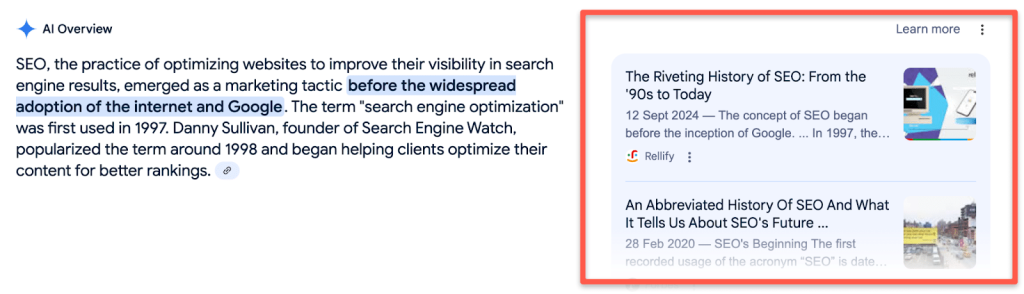
I typed this search “When did SEO become a marketing tactic?”. The results and the sources used in the results are different. Why?
Each search technique has different goals – SEO enables your business to get found, whereas AEO is about being understood, and GEO builds trust as a source used by AI platforms. Together, they make a future-ready digital strategy for your business website.
Compare these screenshots from a SEO result, an AEO featured snippet result, and an AI GEO result.
SEO Result – three websites showing title tag of the site, title of the page, meta description of 150-160 characters and URL.
AEO Result – this featured snippet can have variable length answers from 40 to 60 words and a date for the answer (helpful when recency matters). It’s one type of “answer box” search result and importantly, in this case it also includes the source URL immediately below. When you click through the page highlights text copied to form the AEO result. Note that sites appearing in featured snippets are not included in the 10 natural search results below.
AEO click source page result showing highlighted text.
GEO Result – Flagged as an AI overview, this is the GEO search result including two source websites on the right hand side (I put the red box around it). You can see how it no longer copies text from the source websites and instead summarises into full sentences. The tiny grey link circle at the bottom provides the source link and the reminder “AI responses may include mistakes”.
Notice that there’s no clutter in the AI result? There are no video or image search results; no paid search listings appearing above the natural search results. Draws the eye doesn’t it? Rather like Google’s home page – a lot of white space.
And this reinforces the recent growth in Zero Click Searches – where the answer is displayed and you don’t need to click to a website to read more.
Call me cynical, but it’s as if the tech giants want to train us to use AI.
They do. You’re right, I am a skeptic.
Now is the time to take action and realign your website to cover SEO, AEO and GEO, before the near-inevitable enshittification of the AI search results kicks in.
Definitions of SEO AEO and GEO
GEO is Generative Experience Optimisation and it has been active since the mid 2020s.
Optimising web content to be effectively utilised by generative AI models, ensuring it is structured, contextually rich, and easily interpretable for AI-generated outputs,
What a mouthful. A word of warning – many web articles reference Geographic Engine Optimisation as GEO. This is about optimising for local marketing and is not what we’re working on here. There’s a lot of confusion here and here where the writer talks about search for AI results and then describes local search as the example – they aren’t talking about generative experience optimisation.
Now let’s look at definitions of its two predecessors AEO and SEO.
Answer Engine Optimisation started around 2018 and is
The process of optimising content to be featured in search engine answer boxes by providing clear, concise and structured responses to common user queries,
Search Engine Optimisation began from the late 1990s, when search engines became popular and so marketers wanted their web sites showing up in the search results on page one. SEO is
The practice of optimising a website to improve its visibility in search engine results thereby increasing organic traffic through techniques like keyword optimisation, content quality and backlinking.
No clearer?
Let’s dive into the outcomes you may want as a business and then we can work out whether GEO, AEO or SEO is better related to your needs, You may need all three!
Key features of GEO generative experience optimisation
Appearing in AI answers means your source website pages have to be optimised to enable easy retrieval and summarisation by AI systems. Because AI uses natural language (how people speak) you will need to write your source pages as if you were speaking. Further, AI answers are not just about answering questions – it’s moved on from voice search results which were also based in natural language.
The AI sounds much more chatty; the November 2022 ChatGPT training model launch described itself as conversational AI.
What works for all SEO, AEO and GEO
Fortunately there are some common underpinnings of all three search optimisation methods which everyone should implement on their business website. If you already know how to do this for SEO or AEO, you’ll find that the same technique works for Generative Engine Optimisation.
If you are just getting started, these are your first six tasks.
High quality website content
Relevance and value – good information that actually answers user questions, that showcases your expertise and provides actionable insights will continue to do well. It must be aligned with your target audience. Clarity and simplicity – write to your lowest common denominator audience who may be non-native English speakers (of which there are many in New Zealand). Use language that a 12 year old can understand with short sentences, few three-syllable words, clear explanations and case study examples.
Keyword optimisation
Research and integration – make sure that you’re up to date with relevant keywords, the Domain Rating (DR) score of your competitors and don’t forget to include keywords throughout headings, subheadings and body text. Semantic richness – writing with synonyms and antonyms are good ways to provide case study examples of what not to do as well as covering off a range of relevant and related keywords for your business niche. These allow you to become the best answer for a wider range of queries, prompts and questions and to give examples which deepen the contextual richness of your content.
Structured data
Schema markup – no surprises here, website schema markup is essential for any search optimisation. Different types of schema markup are used for ecommerce product snippets, articles, local businesses, and reviews. Use Google’s markup helper tool. Metadata – same as the answer above, you must use heading hierarchies in a systematic way and include meta descriptions that accurately align with your website topic.
Content structure
Headings and subheadings aren’t just for structured data, they help organise the sequence of information in your writing. Including Heading tags in metadata simplifies data extraction and learning by AI agents as well. Bullet points and lists serve a similar purpose for both human readers and AI. Your ability to organise the article helps humans skim read and jump to the section they need to read.
User engagement
Interactive elements – use a diverse range of techniques like comments and “click to share” snippets which can easily be sent and shared to public social media sites or dark social sharing (private groups or through messaging apps). Feedback loops involve continually updating your article as the landscape changes or new AI search practices emerge. There really is a benefit of being the first to answer and update your article.
Comprehensive coverage
Depth of information continues to be key so that the AI GEO will deliver high-level results as well as taking your explanations and case studies as source inputs for detailed answers which they give users. Remember that some AI platforms include web links to their sources and some do not. I have not listed these because each new software release changes the landscape – do your own research! Updates and accuracy – keep improving your content. Based on your business a well-rounded content marketing plan will include “cornerstone content” that align with your primary keywords, audience top of funnel (TOF) pages and are destinations for paid search. Mutual reinforcement helps to keep your best pages at the top of search rankings for the long term. Remember the pareto principle (80:20 rule) supports best practice SEO and content marketing.
Unique tactics for GEO
Clear and structured content.
Simplicity – write using clear language that’s easy for AI to summarise (parse), understand and reproduce in short sentences. Avoid complex, long sentences and jargon. Check your work by reading it out loud as if you were talking to a friend or teaching a class. Structure – use H1 headings, sub-headings (H2-H6 tags), bold text, bullet points and numbered lists to organise your content so it’s logical and sequential. This aids data extraction by AI.
Semantic richness.
Contextual information – explain the background and context to your topic so that AI understands the nuances of your text. Remember that diverse media types can help readers who prefer images, infographics or video results to also find your website through search. Synonyms and variations – this enables a range of keywords so that your text shows up as an answer in a broader range of queries. It’ll improve your chances of being selected as relevant.
Question/answer and FAQ formats
Pairs of questions and answers – this structure makes it easier for AI to identify both questions and answers. Frequently asked questions are a worthwhile section to include so that direct answers can be retrieved and matched against search queries by AI agents.
Metadata and schema markup
Schema markup tools structure your content so that AI can assess context and relevance. Metadata fields should be accurate and reflect the rest of the content and keywords.
Comprehensive content
Depth of information is rewarded by AI systems so that answers are deep, relevant and can provide answers for both an initial response and more detailed AI prompts. Updates and accuracy based on dates and recency are increasingly important for relevancy and reliability as source answers for AI.
Engagement and feedback
User engagement continues to be an important signal for good quality search results. So any review, comment or social media sharing enhances your GEO. If you can also include checklists, quiz, polls these are additional data points which generative LLMs use as quality scores. Feedback loops from reader answers enable you to continuously update and improve the source article content.
1. BEFORE Page Title: Best Industrial Electricians – Commercial Electrical Services | Apex Industrial
Content:
Welcome to Apex Industrial Electrical Services, your premier choice for industrial electrical solutions! Our team of experienced industrial electricians has been serving the commercial sector for over 15 years. We provide top-quality electrical services that exceed expectations.
AFTER Page Title: How Long Does Industrial Electrical Installation Take? – Apex Industrial Electrical
Content:
Industrial electrical installation timelines vary significantly based on project scope and facility size. Here’s what businesses can expect:
Small Commercial Facilities (Under 1,000 sq metres):
– Basic rewiring: 3-5 business days – Switchboard upgrades: 1-2 days – Emergency power systems: 5-7 days
Large Manufacturing Plants (Over 5,000 sq metres):
– Complete electrical infrastructure: 4-8 weeks – Production line power installation: 2-3 weeks – Backup generator integration: 1-2 weeks….. Read the full case study.
Shop the latest designer women’s clothing at Luxe & Lane! Our luxury fashion collection features the most stylish women’s clothes for the modern woman. From designer dresses to luxury tops, our women’s fashion is perfect for any occasion….. Read the full case study.
AFTERPage Title: What Size Should I Order in Contemporary Women’s Clothing? – Luxe & Lane Sizing Guide
Content:
Contemporary women’s clothing typically runs smaller than traditional department store sizing. Here’s how to find your correct size:
Size Conversion Guide:
– If you wear size 12 in Farmers or The Warehouse → Order size 14 in contemporary brands – If you wear size 16 in department stores → Order size 18 in contemporary brands – Designer brands often run 1-2 sizes smaller than expected
Luxe & Lane Specific Sizing:
Our garments are cut for a tailored, professional fit. Most customers order one size up from their usual New Zealand department store size….. Read the full case study.
3. BEFOREPage Title: Apartment Building Renovation Contractors | Metropolitan Renovators
Content:
Metropolitan Apartment Renovators is your trusted partner for apartment building renovations and apartment renovation services. Our experienced apartment renovation contractors provide comprehensive renovation solutions for apartment buildings.
AFTERPage Title: How Much Does Apartment Building Renovation Cost in New Zealand? – Metropolitan Renovators
Content:
Apartment building renovation costs in New Zealand vary significantly based on scope, age of building, and location. Here’s what property owners can expect:
Per-Unit Renovation Costs (2024):
– Basic refresh (paint, carpet, minor fixtures): $8,000-$15,000 per unit – Mid-range renovation (kitchen, bathroom updates): $25,000-$40,000 per unit – Full renovation (complete fit-out): $45,000-$70,000 per unit
Building-Wide Infrastructure Costs:
– Lift replacement: $80,000-$150,000 per lift – Building recladding: $200-$400 per square metre – Fire safety system upgrades: $15,000-$30,000 per floor – Seismic strengthening: $500-$1,200 per square metre….. Read the full case study.
4. BEFOREPage Title: Performance Car Parts NZ | Turbo Parts | Kiwi Performance Parts
Content:
Welcome to Kiwi Performance Parts, New Zealand’s premier performance car parts store! We stock the best performance car parts, turbo parts, and car modifications for all performance vehicles. Our performance parts catalogue includes top-quality car performance parts from leading brands.
AFTER Page Title: Will a Cold Air Intake Void My Car Warranty in New Zealand? – Kiwi Performance Parts
Content:
Installing a cold air intake in New Zealand may affect your warranty, but it won’t automatically void it entirely. Here’s what you need to know:
Consumer Guarantees Act Protection:
Under New Zealand’s Consumer Guarantees Act, dealers cannot void your entire warranty due to aftermarket modifications unless they can prove the modification directly caused the specific failure.
What Dealers Can and Cannot Do:
– Can refuse warranty claims: If the cold air intake caused the specific problem (e.g., water damage from poor installation) – Cannot void entire warranty: Unrelated systems (brakes, transmission) must still be covered – Must prove causation: Dealer must demonstrate how your modification caused the specific failure
Documentation Requirements:
Keep receipts and installation records. Professional installation by a qualified mechanic strengthens your position if warranty issues arise….. Read the full case study.
Which search strategy is best for me?
Your business will need to agree on a strategy that aligns with what you sell, who you sell it to and where they are located.
Below we share scenarios for each of the 3 search best practices and common errors to avoid. To use this information you should decide if that scenario applies to your business products or services, your type of customers and the location of the customer base. If the answer is yes to all three, you’ve got your answer about whether this is a relevant strategy.
Don’t expect perfect alignment with your unique situation – and if you’d like help, book a call with the Numero expert team [LINK]. We will help validate your choice to get the right mix of performance marketing to suit your sales and lead generation goals.
Three solid use cases
Use SEO for stable, keyword driven traffic (e-commerce retail, brand names, localised content, Google Business Profile (GBP) optimisation, news publishers, B2B lead generation)
Use AEO if your niche has customers who ask quick questions (health, DIY or personal finance)
Use GEO when your audience relies on AI tools for research (tech, travel, SaaS, and education)
Case studies of best practice
Search Engine Optimisation is best used by businesses who want to increase their online visibility and attract a broad audience using organic search traffic. When search includes keywords such as your business name, the brands you sell (Nike Air shoes), or local geographic optimisation words (Post Office near me) these are “static” keywords. They don’t change over time – your business location, the name of your business and the brands you sell are constants for your search marketing work.
A local bakery can optimise its website using keywords which respond to searches like
Best Bakery in Porirua
Artisan Bread wholesale
Gluten Free baking ingredient shop
Custom birthday cakes
When NOT to use SEO marketing. If your business relies on direct sales and in-person visits serving a niche, local customer base who does not use the internet.
Answer Engine Optimisation answers questions really well. So your content which has question/answer pairs and frequently asked questions (FAQs) as well as detailed “how to” guides will serve you well.
A tech startup with a complex software solution needs to use education-led marketing to showcase its solutions to prospective customers using quick answers to common technical questions,
A comprehensive FAQ section on the website backed with schema markup
Written in natural language and optimised for voice search for top of funnel (TOF) and middle of funnel (MOF) sales stages
Concise, informational content with links to deeper, more explanatory answers.
Adding an AI chat bot, an AI tech support or sales team chat function to drive website visitor engagement.
When NOT to use AEO marketing. Your business has a highly technical or complex product that requires customisation and detailed explanations as part of the sales process and these cannot be easily summarised into short answers.
Generative Experience Optimisation works best where both the business and their target audience use AI and know that this is where their search results must feature to kickstart prospect engagement.
A travel agency uses GEO to optimise its content articles about travel packages and guided tours to overseas countries favoured by New Zealanders.
The website content is structured for local search which aligns with the agency’s known customer preferences
Flight departures from New Zealand airports are prioritised to demonstrate relevancy
Showcasing travel guides, recommended itineraries and FAQs on visas and inoculations specific to local clients.
When NOT to use GEO marketing. If your business prioritises human interaction and personalised customer service to achieve sales, the human touch does not translate well into AI search results.
Q&A on differences and similarities between SEO, AEO and GEO
Q: Do I need to choose between SEO, AEO and GEO, or can I use all three?
A: You don’t need to choose – in fact, most businesses benefit from using all three strategies simultaneously. They work together rather than competing against each other. The foundational work you do for SEO (quality content, structured data, keyword optimisation) also supports AEO and GEO. Think of it as building layers: SEO forms your base, AEO helps you capture featured snippets, and GEO ensures you appear in AI-generated answers.
Q: How much time should I spend on GEO versus traditional SEO?
A: This depends on your audience and industry. If your customers are early adopters of AI tools (tech, education, research-heavy sectors), allocate 30-40% of your effort to GEO. For traditional industries or local businesses, maintain 70% focus on SEO whilst gradually incorporating GEO principles. The beauty is that good GEO practices often improve your SEO as well.
Q: Will GEO eventually replace SEO entirely?
A: Unlikely in the near term. Whilst AI search results are more prominent on Google, traditional search results still drive significant traffic and conversions. However, the landscape is shifting rapidly. Since the start of 2025, we’re seeing AI overviews appear for more query types, so businesses that start optimising for GEO now will have a competitive advantage as adoption grows.
Q: How do I know if my GEO efforts are working?
A: Currently, measuring GEO success is challenging because traditional analytics don’t track AI-generated citations well. Look for:
Increases in direct traffic (people finding you through AI, then visiting directly)
Brand mention tracking across AI platforms
Monitoring when your content appears in AI overviews for your target keywords and unique key phrases (e.g. long tail key phrases, registered trademarks)
Engagement metrics on pages optimised for GEO. New tools are emerging to help track this – the measurement landscape will improve significantly over the next year. We recommend using AH Refs Brand Radar as a reliable measurement tool.
Q: Should I rewrite all my existing content for GEO?
A: There’s no need to start from scratch. Begin with your highest-performing pages and most important topics. Use the techniques we describe above like adding FAQ sections, simplify complex sentences, and ensure your content answers questions directly. Focus on your cornerstone content first – the pages that drive the most traffic or conversions. You can gradually update other pages over time as resources allow.
Q: What’s the biggest mistake businesses make with GEO?
A: Writing for robots instead of humans. Whilst GEO requires AI-friendly formatting, the content still needs to engage real people. Don’t sacrifice readability for the sake of structure. Also, many businesses create content that’s too shallow – AI systems prefer drawing from comprehensive, authoritative answers over brief snippets.
Q: How is voice search different from GEO?
A: Voice search and GEO share some similarities (both favour natural language), but they’re distinct. Voice search typically delivers single, quick answers, whilst GEO can provide more comprehensive responses that synthesise an answer from multiple source websites. GEO also appears in text-based AI platforms, not just voice assistants. However, optimising for one can benefit the other.
Q: Do I need technical expertise to implement GEO?
A: Basic GEO improvements (clearer writing, FAQ sections, better semantic structure) can be implemented by anyone with content creation skills. However, advanced techniques like schema markup and comprehensive technical optimisation benefit from SEO expertise. Start with content fundamentals – clear, conversational content that directly answers questions – before moving to technical implementations.
Q: Will paid advertising become less effective as AI search grows?
A: Paid advertising will continue to evolve rather than disappear. We’re already seeing AI platforms experiment with sponsored content and AI-generated ad copy. However, the traditional pay-per-click model may shift towards pay-for-mention or pay-for-citation models in AI responses. Businesses should maintain their current paid strategies whilst monitoring how AI platforms develop their advertising offerings.
Q: How do I optimise for different AI platforms (ChatGPT, Google AI, etc.)?
A: Focus on universal best practices rather than platform-specific tactics, because the AI landscape changes rapidly. Each time a new version of an AI platform is released, they may be using different training data. As different AI platforms have varying source preferences, casting a wide net with quality content is more sustainable than trying to game individual systems.
Q: What are ways for me to target topics?
A: Topic targeting is a valid marketing strategy that moves your web content away from a reliance on keywords towards topics. Identify detailed topics within the niche which your business serves and solves for. This is a great way to get recognised by search engines as an expert. The more comprehensive you can be, the better as this drives your ranking.
Q: Can I just write for my website or do I need a content expert?
A: Content marketing experts and copywriters will never be as knowledgeable as you are about your business, your niche and the detailed knowledge your team has. Where they excel is in writing clearly, explaining detailed concepts so the non-expert can understand and enabling your content to rank in search results. A content marketing expert will be much better at formatting, re-purposing and aligning your content for your target audience and your marketing plan than you can be.
Q: I’m worried about zero click searches. What can I do about these?
A: writing your website content to respond to the GEO search results will help with zero click searches. Using your brand and product names within expert web content can enable them to be picked up by GEO results. Remember some AI search engines include web links (others don’t). Brand mentions can include the names of your key staff members as well as product names.
Ready to get started? Contact our expert SEO team today. [LINK]
Q: Should I still worry about my competitors?
A: Yes, always keep an eye on your top 3-5 competitor brands. Do incognito searches for their AI generated answers. Take note where these overlap with target search queries for your brand. Use these results to double down on your content marketing to counter their ranking results.
Q: Do E-E-A-T signals still matter?
A: Absolutely. Google prioritises Experience, Expertise, Authority and Trustworthiness (E-E-A-T) in search result rankings. So continue to build your business’ content marketing in these areas. You could include interviews with subject matter experts from your staff and customers, keep your case studies and testimonials up to date, try doing novel research and don’t forget storytelling as a content marketing tool. The more you can give the reader actionable advice the better and so checklists, case studies and FAQs should be part of your broad content and SEO strategy.
Future trends and challenges for GEO
As with any developing marketing and technology, the detailed topics of the day will evolve – maybe very fast. Checking back regularly is your best defensive marketing strategy for GEO.
Here is a non-exhaustive list of techniques which Numero is watching closely. We will normally implement new techniques on our own website assets first, but we appreciate working with client partners who also want to stay ahead of their competition and are comfortable with some SEO risk.
Deep personalisation – enable content variations for different audience segments
Dynamic UX (user experience) based on user behaviours like dwell time or click patterns
Predictive search intent modeling to second-guess what trends will rise to popularity and so get ahead of the competition.
Google has SGE Search Generative Experience Insights (SGE) which rank the AI-generated answers.
Expect ever more tools to interpret and summarise your GEO results. We are keeping an eye on MarketMuse, Clearscope and Frase as tools to identify content gaps and semantic keyword opportunities.
Numero is already tracking SERP fluctuations – this is where the AI tools evolve and start to serve different answers to the same search strings. Use these as a guide to adjust your existing content to align with the newly prioritised AI answers.
Website functionality continues to improve and dynamic content tools already exist which show different information to different customers. Working out how the AI tools react to this variability and deliver search results is not yet clear.
And yes, we’re watching this space and so should you. Stay in touch with us [LINK to contact form or register on our CRM?]
In summary
Your approach to modern SEO has to be grounded in a solid marketing strategy which includes content marketing tactics and campaigns within the monthly marketing activities. You will need to keep your web content optimised, website technical optimisation up to date and also track on-site user engagement.
By starting with expert topic-based content which aligns with your business you will be off to a great start. Keep regularly assessing your results and returning to optimise and improve your cornerstone content as part of your marketing calendar. You will soon be ranking well in AI search from GEO results.
If you are looking to boost your online presence, you would want to know a thing or two about SEO marketing and how to leverage it for your website.
In this SEO marketing guide, we will teach you what is SEO and all about the process of search engine optimisation. By the end of this guide, you will know what SEO means and how it works.
Here at Numero, one of the most common questions we get from small business owners is: “What is SEO in marketing?”
If you have just started your digital marketing journey or build your website recently, SEO can be overwhelming. However, that doesn’t necessarily have to be the case.
So let’s get right to the topic.
What is SEO?
SEO is an acronym for search engine optimisation. It is the process of improving your website’s ranking in the search engine’s organic results or the unpaid section.
In plain English, SEO involves optimising your website’s content to make it highly relevant to your target keywords so that the search engines would find it extremely relevant to specific search queries and show the page as a top result for them.
In essence, SEO is all about making some changes to your website content and design to make it more appealing to the search engines.
Benefits of SEO
There are several advantages of investing in SEO for your Kiwi business
By optimising your website for your target keywords, you are working to boost your visibility in the search engines. This in turn will improve your traffic, leads and sales.
By adding useful, engaging, optimised content, you can improve your chances of driving targeted traffic to your website organically.
By improving your site and content for better online visibility and readability, you make your SEO process meaningful.
How SEO Works in Marketing?
Search engines seek to offer the best experience to their users.
This means showing results that are extremely useful and relevant to the search intent. To that end, the search engines crawl or scan different websites to understand their topic and relevance. This allows the search engines to deliver highly relevant listings for a given keyword or topic.
The search engines don’t stop there. Remember, they aim to offer the best experience to search users. And that doesn’t end with high quality, relevant content. That’s why the search engines will crawl your website to identify how user-friendly it is, how easy it is to navigate, whether it is mobile-friendly among other things to reward websites that offer the best user experience with a higher ranking in the search engine results pages (SERPs).
There are three crucial parties in the context of SEO – your website, Google (or any other search engine for that matter) and the search user. If you have a page about how to take still photography, you want Google to list it at the top of the search results when someone searches for the words “still photography”.
SEO is the secret ingredient that you add to your article to improve your chances of Google showing up your page in the top results when people search for that keyword.
Google considers more than 200 ranking factors when ranking a website in its search index. However, just like everything, there are two sides to SEO – the good and the bad. Let’s take a look at these.
White Hat vs Black Hat SEO Techniques
SEO is a long-term strategy and shortcuts don’t work. However, in your quest for lowering your cost on SEO, if you end up choosing a cheap SEO consultant, you may end up doing hurting your search rankings.
You must make sure you are investing in white hat SEO techniques and not black hat SEO by an experienced SEO agency in NZ. What’s the difference?
Black hat SEO is all about ranking a site in the search engines without any regard for the target audience. This strategy results in poor quality, spammy pages that are likely to get banned quickly. Common black hat strategies include duplicate content, links from websites that don’t have any relevant content, keyword stuffing, invisible text and cloaking.
On the other hand, white hat SEO is the way to build a sustainable online presence. By going down this route, you are prioritising your target audience and are focused on providing the best user experience.
A white hat SEO strategy means creating useful, relevant content, unique page titles, relevant references and links, standards-compliant HTML, good grammar and spelling among other things.
On-page SEO
On-page SEO is all about optimising the elements that are in your control, the elements that occur on your website. Here are some crucial on-page SEO factors that will boost your search rankings in Google:
Title tag
Meta description
Sub-headings
Internal links
Optimised images
ALT tags
Content
Site architectures
Page load speed
Mobile-friendliness
Off-page SEO
Off-page SEO elements are things that happen out of your website. You don’t have any direct control over these elements but they have an immense impact on your rankings.
Here are some important off-page SEO factors that affect your search rankings:
Trust – Trust is an extremely important factor that Google considers when ranking websites. The quality of your backlinks plays a great part here. There are four aspects to building trust:
Domain & page authority
Bounce rate
Domain age
Brand identity
Links – Backlinks a great way to improve your rankings. However, the quality of the links matters. Links from spammy websites can get your website banned from the search engine results pages. Instead, you must put in the time to launch an outreach campaign to earn backlinks from authority websites.
Social Profile – Social signals are another important off-page SEO factor.
Conclusion
We hope this helps answer your question: “What is SEO in Marketing?”
Having the right online presence is ever more important and a well-designed SEO strategy is essential to that end.
If you are not sure where to begin or can’t find the time to launch your own SEO strategy, trust the experts at Numero to boost your online presence with our carefully crafted SEO strategy for your business.
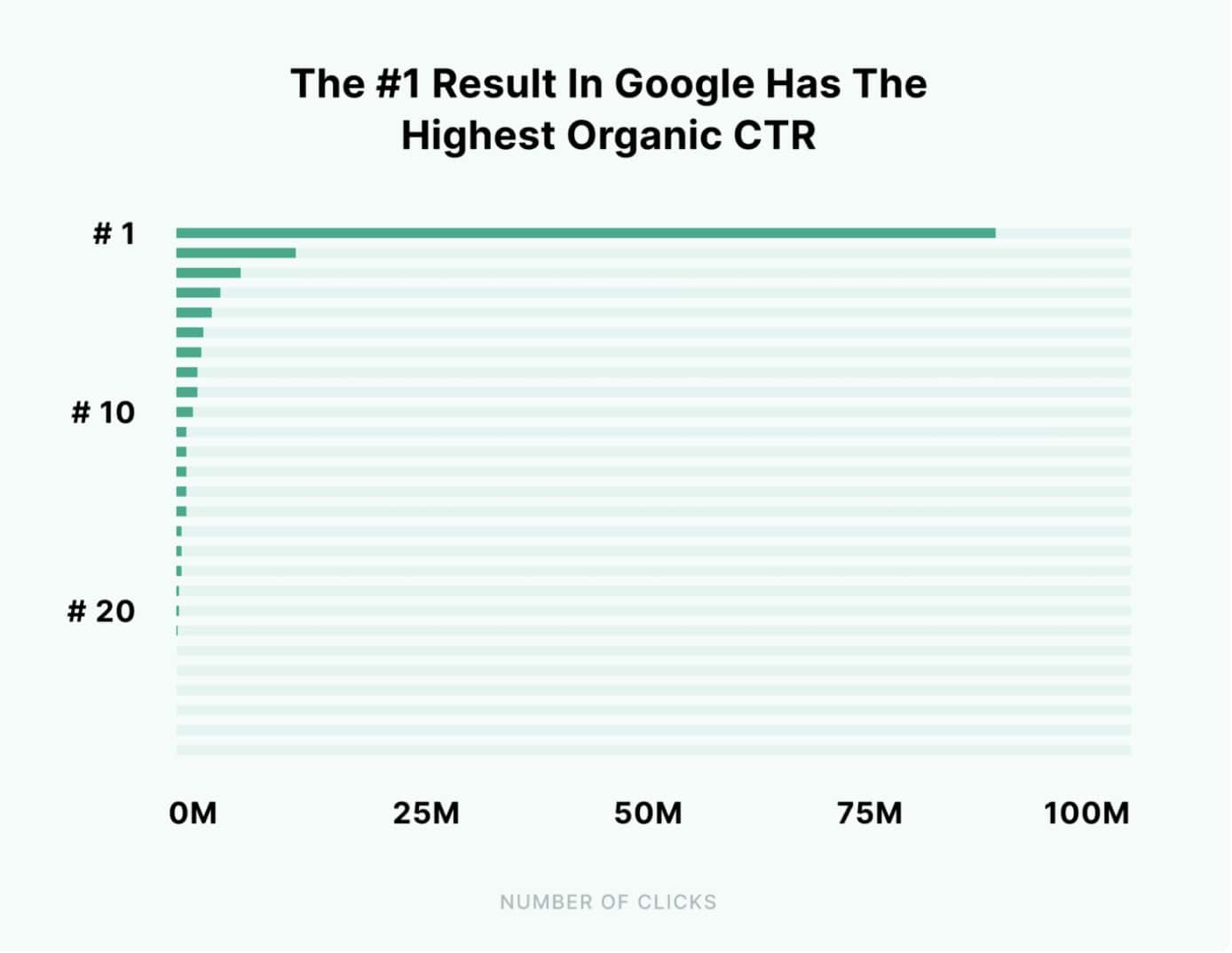
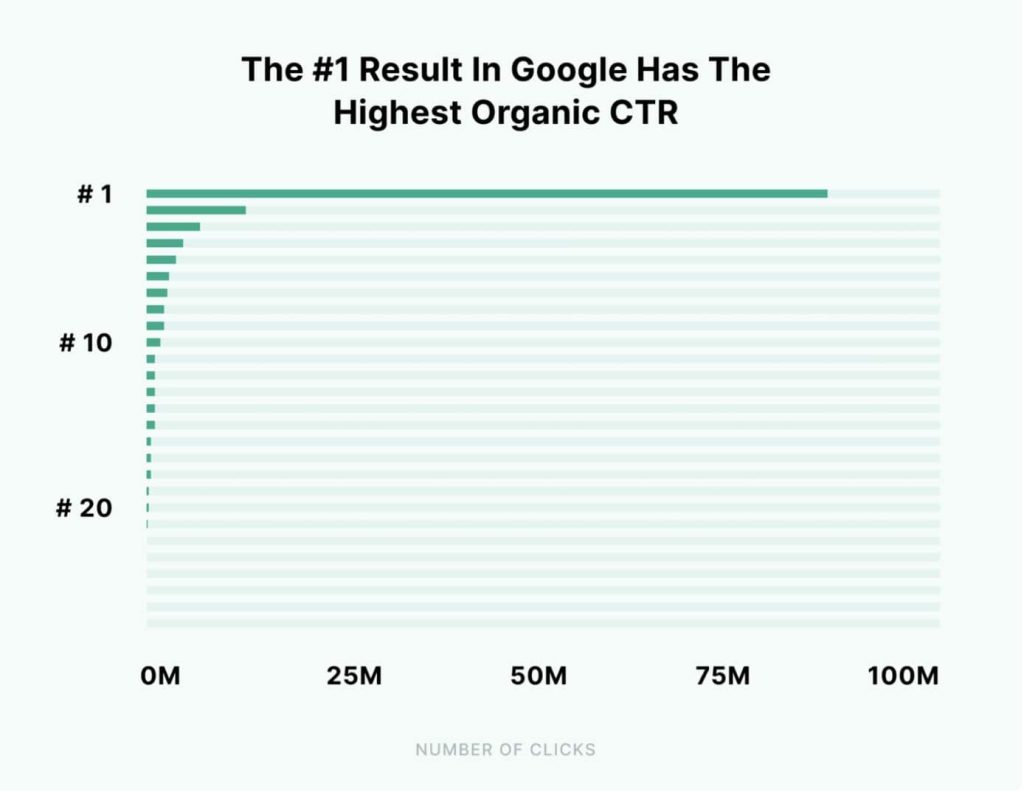


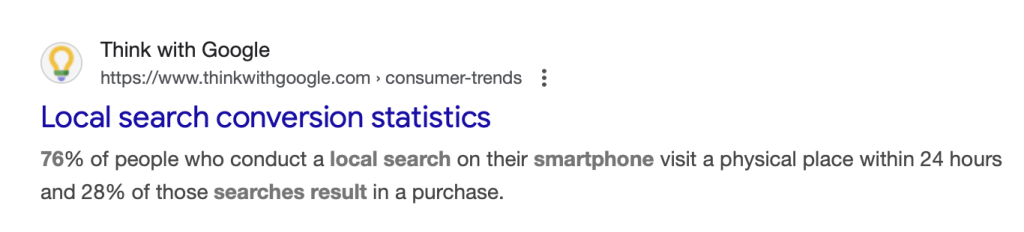


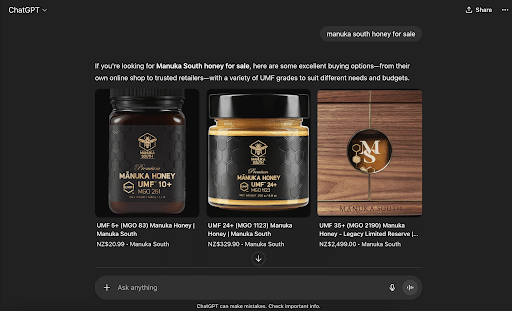
![How Much Does SEO Cost in NZ? [2025 Pricing Guide]](https://demo.numeroagency.co.nz/wp-content/uploads/2025/09/firmbee-com-jrh5lAq-mIs-unsplash-scaled-1.jpg)